

The Democratic Republic of Congo has a problem that should trouble every government seeking to build an industrial economy from its natural resources: controlling a mineral is not the same as controlling the money generated by it.
On November 30, 2026, the country is scheduled to suspend all cobalt exports once again, placing one of the world’s most important battery minerals at the centre of a growing contest over commodity prices, industrial power and economic sovereignty.
The decision, announced by the country’s strategic minerals regulator, ARECOMS, on November 23, is intended to address falling prices, excess supply and rising inventories. It represents a second attempt in less than two years to use control over exports to reshape the international cobalt market.
But the deeper question is not simply whether Congo can make cobalt more expensive by restricting shipments. It is whether the country can turn its extraordinary position in the mining industry into lasting influence over the international battery economy.
That distinction matters. Congo supplies approximately 73% of the world’s mined cobalt, according to 2025 industry figures. Yet much of the processing, refining and industrial manufacturing that transforms the mineral into higher-value products takes place elsewhere.
China, in particular, occupies a commanding position in the refining business.
The resulting imbalance reveals an uncomfortable reality about the global energy transition: countries supplying essential minerals do not necessarily control the industries that depend on them.
Congo’s latest intervention is an attempt to challenge that arrangement. Whether it succeeds will depend on what happens beyond the export gates.
Why Congo Is Suspending Cobalt Exports Again
The immediate explanation is economic.
Cobalt prices experienced renewed pressure during 2026 as supply exceeded demand, inventories increased and consumption weakened relative to expectations. ARECOMS says the market has been affected by persistent price declines and speculative trading.
The regulator intends to use the suspension to reconsider the allocation of export quotas and bring Congolese shipments into closer alignment with global demand.
The decision is particularly significant because Congo had already introduced an export suspension in February 2025.
That earlier intervention was designed to address an oversupplied market and exceptionally weak prices. Exports subsequently resumed under a quota system in October 2025.
However, the return of exports did not permanently resolve the underlying problem.
The new suspension will cover cobalt from industrial, semi-industrial and artisanal mining operations. It also applies to previously authorised shipments that have not actually left the country by the November 30 deadline.
Importantly, the suspension will remain in force until a separate decision authorises exports to resume. A review after four months does not automatically mean shipments will restart.
This is a stronger regulatory intervention than simply adjusting monthly export volumes.
It signals that Kinshasa wants greater control over the timing and conditions under which its cobalt enters international markets.
The development also connects to a wider attempt by Congo to strengthen its negotiating position through control of information, licensing and mineral ownership. Our investigation, DRC Takes Control of Its Mineral Data as Global Powers Race for Congo’s Critical Minerals, examines this emerging strategy.
However, restricting supply is not the same as creating sustainable demand. That distinction will determine whether the policy delivers lasting economic benefits or merely produces another temporary market recovery.
China’s Dominance Extends Beyond the Mines
Congo’s ability to influence cobalt supply should not be confused with China’s ability to influence the wider cobalt industry.
The distinction is fundamental.
China has spent years establishing a position across mineral extraction, processing, refining, battery materials and manufacturing. Its influence is not dependent on controlling every Congolese mine. It comes from the connections between different stages of the supply chain.
China’s dominant position in cobalt refining illustrates how concentrated the industry’s processing activities have become.
This gives Chinese companies and manufacturers an important commercial advantage. They have access to established processing facilities, technical expertise, industrial infrastructure and extensive relationships with battery producers.
Congo, by comparison, remains heavily dependent on exporting mined materials and intermediate products.
That imbalance is central to understanding the latest suspension.
Even if Kinshasa successfully pushes international cobalt prices higher, the financial benefits will be distributed across a complicated network of mining companies, traders, refiners, manufacturers and investors.
Higher prices do not automatically mean higher government revenue.
The actual outcome depends on export volumes, contractual arrangements, taxation, production costs and the ability of mining companies to maintain profitable operations.
This wider ownership question is explored in our analysis, Who Really Owns Africa’s Critical Minerals?, which examines the influence of international companies, investors and African state institutions.
It is also worth examining Who Owns Africa’s Critical Minerals? The New Battle for Copper, Cobalt and Lithium, particularly its assessment of how mining ownership is changing across Congo, Zambia and Zimbabwe.
The central issue is that controlling a mineral deposit does not necessarily mean controlling its commercial future.
The Electric Vehicle Industry Faces a Different Kind of Risk
Cobalt is closely associated with electric vehicles, but the relationship between cobalt prices and battery manufacturers is becoming more complicated.
The traditional assumption is that restricting cobalt supplies will significantly increase the cost of producing electric vehicle batteries.
That may happen in some circumstances, particularly for manufacturers dependent on nickel-based battery chemistries. However, technological developments are reducing the industry’s exposure to cobalt.
Lithium iron phosphate batteries, commonly known as LFP, contain no cobalt. Their increasing adoption has created an alternative for manufacturers seeking lower costs and reduced dependence on certain critical minerals.
This is a significant development for Congo.
Battery manufacturers have increasingly embraced LFP technology because it offers advantages in cost, safety and material availability.
Nevertheless, cobalt remains relevant in several high-performance battery applications, portable electronics and other industrial technologies.
Global cobalt demand has continued to be supported by battery manufacturing and other industrial applications. However, the composition of demand is changing as manufacturers adopt different battery chemistries.
For international manufacturers, another prolonged suspension could create uncertainty around procurement contracts, inventories and future supply arrangements.
Some companies may turn to alternative suppliers, draw on existing stocks or accelerate investment in cobalt-free technologies.
Others may seek longer-term agreements with Congolese producers and refiners.
This technological transition is part of a much wider African industrial debate. Our feature, Africa Could Power the Green Revolution, But Will Africans Own It?, examines the ownership and financing challenges behind the emerging green economy.
For a closer look at the corporate interests shaping that transition, read The 20 Companies Controlling Africa’s Green Energy Future.
Kenya’s ambitions to participate in electric vehicle manufacturing demonstrate another dimension of this industrial transition, as examined in Kenya’s $3 Billion Electric-Car Investment.
Who Benefits Financially From the Suspension?
The answer is more complicated than it first appears.
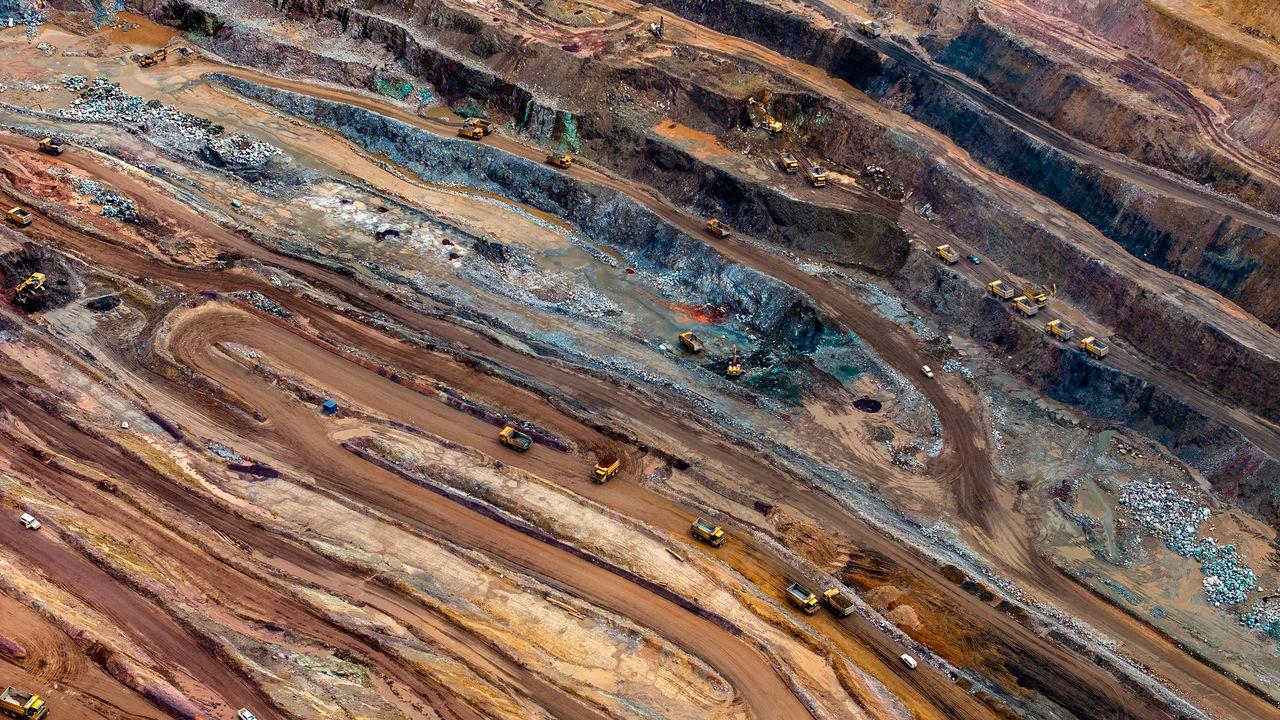
The immediate beneficiaries could include cobalt producers operating outside Congo, particularly in countries such as Indonesia, where production has expanded significantly.
If Congolese exports remain restricted while demand for cobalt-bearing products continues, alternative producers could attract additional customers and secure more favourable commercial terms.
Mining companies with operations outside Congo could also benefit from stronger prices, depending on their production costs and contractual arrangements.
Existing inventory holders may gain from a price recovery if they can sell accumulated material at higher market prices.
Trading companies could benefit from volatility and changing regional price differentials, although speculative positions also carry substantial risks.
But Congo’s own mining companies and government are not guaranteed immediate gains.
A prolonged export suspension can create storage costs, financing pressures and operational difficulties. Mining companies may eventually reduce production if they cannot move their products into international markets.
Workers, contractors and businesses supplying mining communities could also experience the consequences of disrupted operations.
For the Congolese government, the central calculation is whether the potential improvement in future export earnings outweighs the immediate economic costs of restricting shipments.
The government does not receive the entire value of every tonne exported.
Its revenue comes through a combination of royalties, taxes, state participation, dividends and other fiscal arrangements. Higher international prices can strengthen these revenue streams, but only when production, exports and tax collection remain effective.
The suspension is therefore a bargaining instrument, not a guaranteed financial windfall.
For another perspective on how governments are attempting to capture more value from mineral production, see our investigation, Who Really Owns Africa’s Gold? The Battle for Mines and Refineries.
Africa’s Mineral Sovereignty Needs an Industrial Strategy
Congo’s intervention raises a broader question for African governments: can control over natural resources become a foundation for industrial power?
The continent has considerable mineral wealth, but much of its economic participation remains concentrated in extraction.
This is a problem that extends beyond cobalt.
Lithium from Zimbabwe, copper from Zambia, manganese from South Africa and graphite from Mozambique are all connected to international industrial supply chains.
Yet the processing facilities, manufacturing capabilities, specialised technologies and commercial networks that generate additional value are often concentrated outside the continent.
The challenge is not necessarily that every African country should manufacture complete batteries. That would require enormous capital, reliable electricity, skilled labour, transport infrastructure and access to competitive markets.
A more realistic strategy would involve selecting commercially viable stages of the supply chain.
For Congo, this could include expanding cobalt processing, producing battery-grade chemicals, developing technical expertise and attracting investment into downstream manufacturing.
For Zambia and Congo together, regional industrial cooperation could create opportunities around copper processing, battery materials, electricity infrastructure and mineral transportation.
Our report, Zambia’s Copper Boom: Who Really Owns the Wealth?, explores the ownership structures and investment decisions shaping one of the continent’s most important copper industries.
Zambia’s political and economic ambitions are also closely tied to its copper industry, as explored in our analysis of Hichilema’s Second Term and What It Means for Africa’s Copper Economy.
The wider geopolitical competition is examined in Africa’s Critical Minerals: The Global Race for Congo, Rwanda and Mozambique.
The United States is also attempting to establish alternative mineral partnerships, as explored in Why the US Is Turning to Africa for the Minerals Behind the Next Industrial Race.
Meanwhile, Africa’s Critical Minerals: How China, America and Russia Are Competing for Control examines the broader international contest for strategic resources.
The objective should be to use this competition to secure better investment terms, expand domestic processing and strengthen African participation in international markets.
Infrastructure will be central to that effort. Our analysis, Who Is Winning the Race to Own Africa’s Infrastructure?, examines why ports, railways, electricity and logistics are becoming essential instruments of economic influence.
Other African governments are already confronting similar questions. Kenya’s mineral ownership debate is explored in Africa Has the Minerals. But Who Controls the Money?, while Tata Chemicals Ordered to Leave Kenya examines the country’s push for greater local value creation.
A related examination of foreign mining concessions is available in Tata Chemicals Exit: Who Will Control Kenya’s Lake Magadi Soda Ash Wealth?.
For an example of how other mineral-rich countries are attempting to diversify their economies, see Cameroon’s New Gold Rush: Can Mining Beat Oil?.
The broader energy and manufacturing implications also connect with From Lagos to Lamu: How Dangote Is Building Africa’s First Truly Continental Oil Empire.
The question of who finances and owns large African industrial enterprises is equally important, as explored in Who Gets to Own Africa’s Biggest Industrial Projects? The Dangote IPO Reveals the Barriers.
The two countries already possess complementary mineral resources and geographic advantages. Coordinated investment could give them greater negotiating power than isolated national strategies.
This also explains the growing international interest in regional infrastructure such as the Lobito Corridor, which connects mineral-producing areas to Angola’s Atlantic coast.
However, infrastructure alone will not create industrial sovereignty. African businesses must also participate in financing, ownership, management and technology development.
The continent’s negotiating position will remain limited if its principal contribution to global industrialisation is the supply of raw materials.
The Danger of Relying on Export Bans
There are legitimate reasons for governments to intervene in mineral markets, particularly when oversupply threatens national revenues and the long-term viability of domestic producers.
However, repeated export suspensions can create uncertainty for investors.
Mining projects require long-term capital commitments. Companies make decisions about exploration, equipment, infrastructure and employment based on expectations about future operating conditions.
When export regulations change abruptly, businesses may become more cautious about investing in additional capacity.
That does not mean governments should surrender their regulatory authority to investors.
Rather, resource policy must balance national economic interests with predictable rules, transparent enforcement and credible long-term planning.
Congo also needs to address the structural weaknesses that make export restrictions attractive in the first place.
These include limited domestic processing capacity, dependence on foreign capital, infrastructure constraints and the difficulty of capturing more value from mineral production.
The country’s experience is also relevant to the wider debate about Chinese investment and strategic infrastructure. Consider Who Owns Egypt’s Gateway to Africa? China’s Expanding Suez Footprint, which illustrates how industrial zones, ports and logistics networks can create influence beyond the ownership of individual mines.
Congo’s earlier suspension in 2025 demonstrated that government intervention can influence international cobalt prices. The new suspension will test whether those gains can be sustained without undermining investment and production.
Another risk is that international buyers could accelerate diversification away from Congolese supply.
Indonesia’s growing production demonstrates that alternative sources are becoming increasingly important. Technological changes in battery manufacturing add another layer of uncertainty.
If Congo relies too heavily on restrictions, it could encourage the very supply-chain diversification that eventually reduces its influence.
The strongest bargaining position is not simply the ability to stop exports. It is the ability to supply essential materials while offering the industrial infrastructure, skills and investment environment that international manufacturers need.
The Next Battle Is Over Value, Not Volume
The most important question emerging from Congo’s latest decision is whether African mineral producers can move beyond controlling the quantity of resources entering international markets.
Congo has demonstrated that its decisions can influence a globally important commodity. But lasting economic power requires something more substantial: the ability to determine where minerals are processed, who finances industrial development, which companies own productive assets and where the resulting profits accumulate.
China’s advantage was not created simply by buying access to African mines. It was built through investment in processing, manufacturing, infrastructure and technology.
African governments should study that strategy rather than focus exclusively on export restrictions.
Congo has an opportunity to use its mineral wealth to negotiate better investment agreements, expand domestic industrial capacity and develop stronger partnerships with neighbouring countries.
But these opportunities require competent institutions, transparent contracts, reliable infrastructure and policies that survive political changes.
The outcome of the November 30 suspension will provide an important indication of how far Kinshasa is prepared to go in asserting control over its resources.
Congo may have the power to interrupt the world’s cobalt supply. But the greater achievement would be to build an economy that no longer depends on exporting its natural wealth to other countries to create industrial prosperity.
That is the difference between being an important supplier in the global economy and becoming an influential industrial power.
For Africa, the distinction could define the next generation of its economic development.

More from Mining
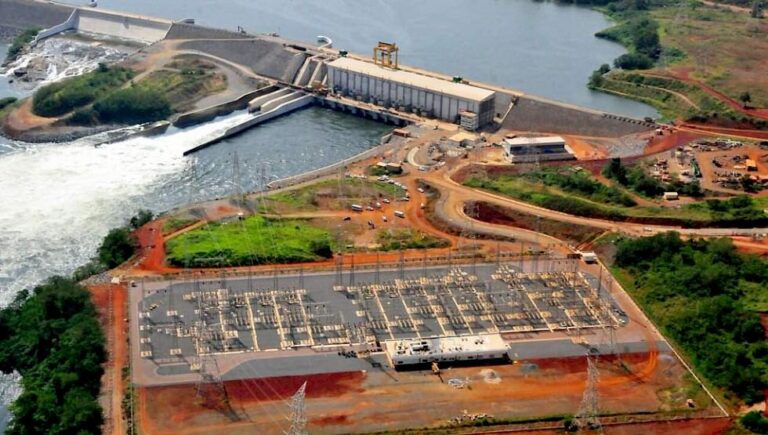
Liberia’s $5.6 billion mining deal: Who controls its energy future?
Liberia is converting gold revenues into electricity and infrastructure, but financing arrangements raise questions about public ownership, accountability and economic sovereignty.

Who really owns Africa’s gold? The battle for mines and refineries
West Africa's refining ambitions expose a deeper struggle over mineral ownership, foreign capital, economic sovereignty and who ultimately profits from Africa's gold.
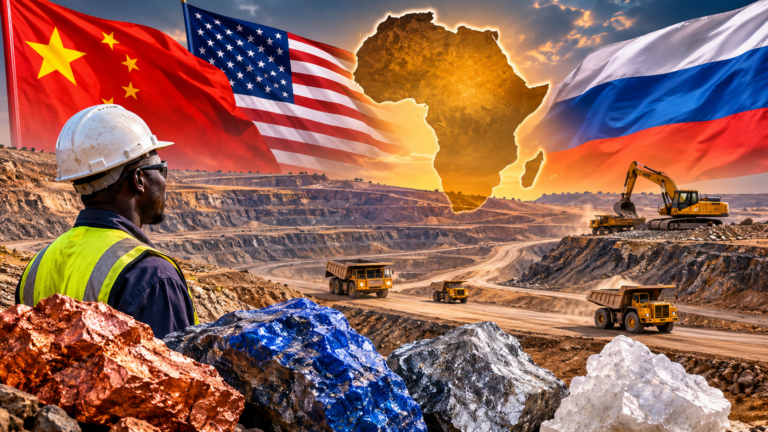
Africa’s critical minerals: How China, America and Russia are competing for control
Africa's mineral wealth is attracting global powers, but ownership, processing capacity and political influence will determine who ultimately captures its economic rewards.