


Africa’s gold wealth presents one of the continent’s most persistent economic contradictions: countries produce enormous quantities of precious metal, yet much of the financial power generated by mining remains outside their borders.
The emerging West African refining revolution is an attempt to change that arrangement. But building refineries and increasing government ownership will not necessarily mean Africans control the gold business. The more important question is who controls the entire chain, from the ground beneath the mines to the vaults, trading desks and financial institutions that determine where the profits ultimately go.
A new struggle over Africa’s gold
West Africa’s gold industry is entering a significant period of restructuring. Ghana, Guinea, Mali and Burkina Faso are increasingly determined to capture more economic value from their mineral resources rather than remain suppliers of raw gold to international markets.
The ambitions are understandable. Gold is among the region’s most valuable exports, yet mining countries have historically depended on foreign companies for capital, sophisticated extraction technology, processing infrastructure and access to international bullion markets.
This struggle is part of a wider transformation affecting Africa’s mineral economy. As explored in our analysis of Africa’s critical minerals and the global battle for ownership, the continent’s resource wealth is increasingly attracting competing international investors seeking access to strategic supplies.
The question is whether African countries can turn that international interest into lasting industrial and financial power.
A growing number of governments are betting that domestic refining will help achieve this objective.
But there is a fundamental distinction between processing gold locally and controlling the commercial networks through which it is financed, purchased, certified and sold.
The real battle is therefore bigger than refining. It is about economic control.
Who owns the mines?
The first part of the ownership question begins at the extraction stage.
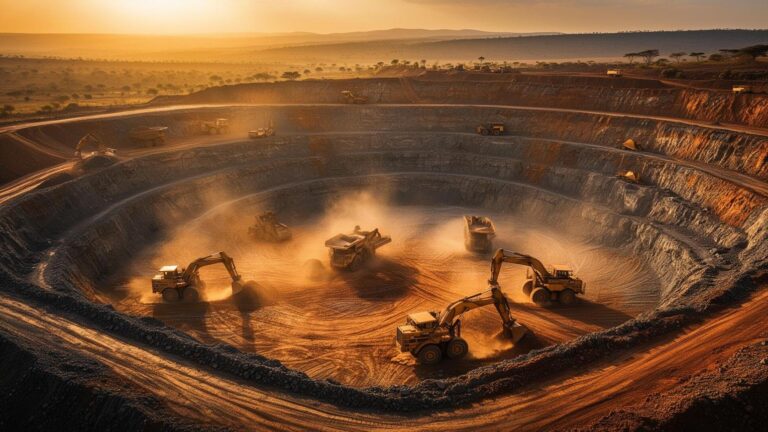
Across West Africa, major gold mines are operated by a combination of international mining corporations, regional companies and smaller domestic businesses. Governments generally retain legal authority over mineral resources and participate through royalties, taxes, licensing arrangements and statutory equity interests.
However, operational ownership remains heavily internationalised.
In Ghana, one of Africa’s largest gold producers, the mining landscape includes companies such as Newmont, AngloGold Ashanti, Gold Fields and Zijin Mining.
These companies operate or have held interests in some of the country’s most important mining assets.
Ghana’s statutory government interest in many large-scale mining operations has historically been 10%, although ownership arrangements differ between projects.
This arrangement exposes a distinction that is often missing from discussions about mineral sovereignty.
A country can own a minority stake in a mine without controlling its investment decisions, technical operations, procurement arrangements or international marketing relationships.
The mining company may provide the capital, employ the specialists, operate the equipment and negotiate commercial arrangements. The government receives its contractual and statutory share, but much of the operational expertise and corporate decision-making remains elsewhere.
This is not necessarily evidence of exploitation. Large-scale mining requires substantial investment, specialised knowledge and a tolerance for considerable geological and commercial risk.
The question is whether the economic benefits are sufficient to justify the arrangement, and whether domestic companies are developing the capacity to participate at a higher level.
Ghana is attempting to change the ownership equation
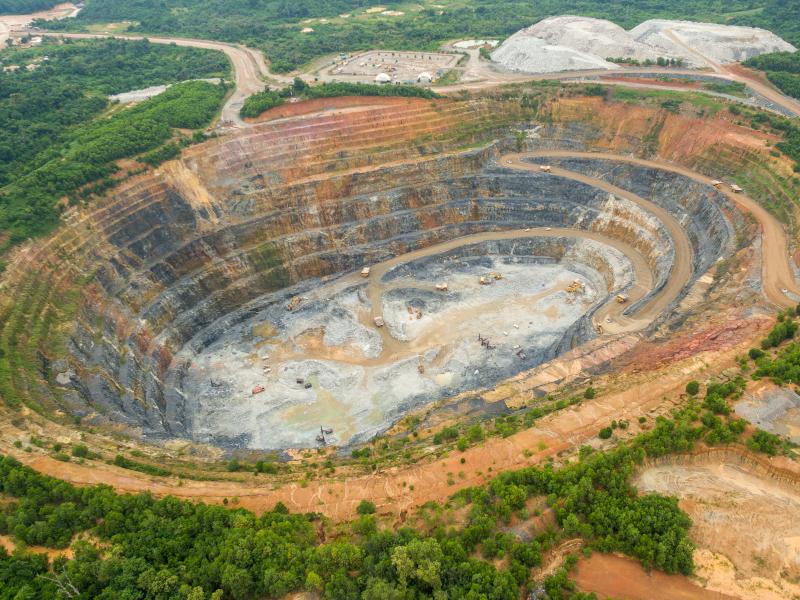
Ghana is among the most ambitious countries attempting to restructure the gold value chain.
Its establishment of the Ghana Gold Board, commonly known as GoldBod, in 2025 represented an important shift in the government’s approach to the gold business.
Under its new framework, GoldBod became central to regulating and undertaking the purchase, sale, assaying and export of gold from the artisanal and small-scale mining sector.
The objective is to improve transparency, reduce smuggling, strengthen official gold purchasing channels and retain more foreign-exchange earnings within the formal economy.
The government has also pursued a more direct relationship with large-scale producers.
In June 2026, GoldBod announced an agreement under which the state would purchase 30% of the gold output of large-scale mining companies, beginning in July.
There is also a growing emphasis on ownership of refining infrastructure.
In January 2026, Ghana announced a 15% free-carried interest in Gold Coast Refinery.
These measures indicate that Ghana is moving beyond simply collecting mining taxes. It wants a larger position in the commercial infrastructure through which gold is purchased, processed and sold.
Yet the success of this strategy will depend on the quality of its commercial arrangements, the transparency of GoldBod’s operations and the ability of domestic refineries to compete internationally.
State participation is a beginning, not a guarantee of success.
Guinea’s refining ambitions expose the practical difficulties
Guinea offers another revealing example.
The country has substantial mineral wealth, and gold has become an increasingly important part of its mining economy.
Its government is now seeking to move more processing activity inside national borders.
The inauguration of the Nimba Gold Refinery in November 2026 was an important development in that effort. However, the transition has not been straightforward.
New local-refining requirements have created difficulties for some major mining companies, which faced restrictions on exporting unrefined gold after the expiration of a transition period.
This raises an important ownership question.
If a refinery is located in Guinea but its operating expertise, commercial relationships and technical management are provided by an international company, how much of the value chain has genuinely become domestic?
Foreign partnerships can be useful and necessary. The problem arises when domestic institutions lack the technical capacity, bargaining power and transparency to ensure that the partnership develops lasting local capabilities.
Guinea’s experience demonstrates that a refining policy needs more than a building and a government directive. It requires functioning infrastructure, credible commercial rules, trained specialists and reliable access to international markets.
Mali and Burkina Faso are challenging the old mining arrangements
In the Sahel, the struggle over gold ownership has taken a more direct political and institutional form.
Mali has revised its mining framework to increase state and domestic participation in mineral projects.
Its 2023 Mining Code, formally adopted in August 2024, provides for a 10% non-contributory government interest in new mining projects, with an option to acquire another 20%. Local residents can also acquire an additional 5%.
This means public and domestic Malian interests can potentially reach 35% in projects governed by the new arrangements.
The policy reflects a broader effort to renegotiate the relationship between foreign mining companies and resource-owning countries.
However, the experience also demonstrates the risks of aggressive resource nationalism.
Disputes over mining agreements, taxes, fiscal obligations and existing contractual protections can create uncertainty for investors and disrupt production.
Burkina Faso has gone further by transferring five mining assets to its state-owned mining vehicle, SOPAMIB.
These developments demonstrate that governments are increasingly willing to use ownership, regulatory authority and nationalisation to obtain a greater share of their mineral wealth.
But the central test remains whether state-owned mining institutions can operate profitably, transparently and efficiently.
Taking control of an asset is easier than developing the technical, financial and managerial capacity required to operate it successfully.
The hidden owners: Traders, financiers and international markets
The debate about Africa’s gold ownership often concentrates on mining companies and governments. That is only part of the story.
Between the mine and the final buyer exists a sophisticated network of commercial interests that can exercise considerable influence over the value of gold.
These include:
- Gold aggregators who purchase production from smaller miners.
- International bullion traders who arrange large-scale transactions.
- Refiners that transform doré into internationally marketable bullion.
- Banks and commodity financiers that provide working capital.
- Transport, insurance and security companies that move precious metals across borders.
- International bullion markets that establish recognised pricing and trading standards.
In artisanal mining, these networks can be particularly influential.
Small-scale miners often lack the capital to finance equipment, purchase processing materials, transport gold or wait for favourable market prices. They consequently depend on intermediaries who provide immediate access to cash and commercial markets.
The person extracting the gold may therefore have little negotiating power over its eventual selling price.
This is where the ownership debate becomes more complicated.
A Ghanaian, Malian or Burkinabè miner may legally own a mining operation, but the economic value of the gold can still be influenced by buyers, financiers and trading networks operating outside the country.
The problem is not simply foreign ownership. It is the concentration of commercial power at different stages of the supply chain.
This wider issue is also explored in Africa has the minerals, but who controls the money?, which examines how financing, corporate structures and commercial agreements influence who captures the value of African mineral resources.
Governments seeking to formalise gold production must therefore look beyond licensing miners. They must also understand who finances extraction, controls purchasing and determines access to markets.
Without that broader approach, formalisation could simply transfer commercial opportunities from informal intermediaries to a smaller group of politically connected or internationally established businesses.
The refinery ownership question
One of the most important developments in West Africa is the attempt to establish domestic refining infrastructure.
Historically, gold-producing countries have exported doré, a partially refined gold product, to established international refining centres.
Those facilities have built reputations through technical expertise, consistent quality, traceability systems and accreditation.
The London Bullion Market Association plays an important role in establishing recognised standards for gold refiners.
Its Good Delivery accreditation is particularly important for access to major international bullion markets.
This creates a significant challenge for West African governments.
A refinery can possess modern machinery, employ local workers and receive government support, yet still struggle to sell its output competitively if it lacks the necessary international recognition.
Ghana’s refining strategy illustrates this challenge.
Gold Coast Refinery has been positioned as an important part of the country’s domestic processing ambitions. Ghana’s 15% equity interest gives the state a direct ownership position, while partnerships with established international refiners offer potential routes towards recognised industry standards.
The distinction between local processing and internationally recognised refining is crucial.
If gold must still travel abroad for final certification or access to established bullion markets, domestic refining represents progress, but not complete control.
The most successful strategy would be to develop local refineries that can meet international standards independently while building strong relationships with global financial institutions.
Too many refineries, too little gold?
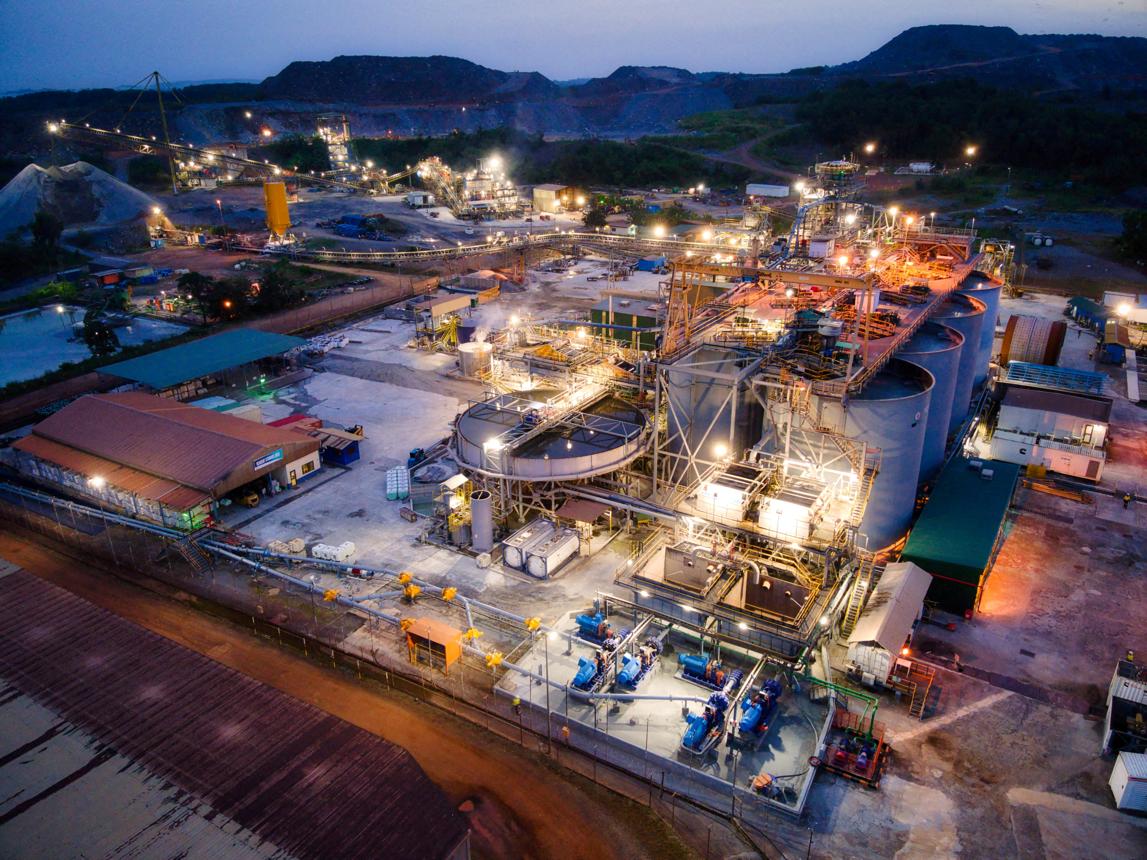
West Africa’s refining expansion also raises an economic question that deserves more attention.
Can the region sustain all the refining capacity currently being announced?
Recent Reuters reporting on November 24, 2026, put announced or launched refining capacity across Ghana, Guinea, Mali and Burkina Faso at more than 1,000 tonnes annually, against estimated regional gold production of approximately 585 tonnes.
That means planned and operating capacity is approaching twice the estimated supply.
This is not necessarily a problem if facilities process gold from neighbouring countries or international markets. But those commercial arrangements cannot be assumed.
Refineries require consistent feedstock, reliable electricity, trained workers, financing and access to buyers.
Their profitability also depends on operating at sufficient scale.
Gold refining itself does not automatically generate enormous additional value. Much of the value of gold is already established through its purity, international market price and the commercial relationships supporting its sale.
A country that spends heavily on refining infrastructure without securing adequate supply and competitive markets could end up with expensive, underutilised facilities.
There is also a danger of confusing industrial capacity with economic sovereignty.
A refinery that operates below capacity, relies on imported technical expertise and sells through foreign intermediaries may contribute less to national development than its construction costs suggest.
Governments should therefore prioritise commercially viable facilities, regional cooperation and credible international accreditation rather than compete for the largest announced capacity.
Who benefits when ownership changes?
The potential beneficiaries of West Africa’s gold reforms extend beyond national governments.
For ordinary citizens, greater domestic control could mean higher public revenues, improved infrastructure, employment opportunities and more resources for education and healthcare.
For African businesses, local refining could create opportunities in engineering, logistics, security, financial services, technology and specialised mining equipment.
For governments, increased domestic gold purchases could strengthen foreign-exchange management and provide another instrument for managing international reserves.
But these benefits will not emerge automatically.
A state-owned refinery does not guarantee that communities near mining operations receive adequate compensation.
A larger government stake does not guarantee that public revenue will be invested responsibly.
And a domestic gold trading institution does not necessarily guarantee fair prices for small-scale miners.
The distribution of benefits matters as much as the percentage of national ownership.
There is also an environmental dimension that cannot be ignored.
Artisanal and small-scale mining remains a major source of employment across parts of West Africa, but poorly regulated operations can damage agricultural land, contaminate water sources and expose workers to hazardous substances.
In Ghana, illegal mining, commonly known as galamsey, has become a particularly serious environmental and governance challenge.
A gold policy that focuses exclusively on export earnings while neglecting environmental protection risks creating a situation in which national revenues increase while local communities bear the long-term costs.
Responsible sourcing, traceability and enforcement must therefore be central to the new ownership agenda.
The international competition for Africa’s gold
Africa’s gold industry also sits within a wider international competition for natural resources.
Western mining corporations, Chinese investors, Middle Eastern trading interests and international financial institutions all have different commercial and strategic interests in the continent’s mineral economy.
Their involvement is not inherently negative.
Foreign investment has helped develop mines, create employment, introduce advanced technology and connect African producers to international markets.
However, African governments need to negotiate from a position of institutional strength.
The question should not be whether African countries should reject international investment. It should be whether those investments create sustainable domestic economic capabilities.
A productive partnership should leave behind more than royalties and temporary employment.
It should support local engineering companies, develop mining professionals, expand domestic financial services and improve the ability of African institutions to participate in international commodity markets.
The wider implications are explored in our feature, Africa could power the green revolution, but will Africans own it?, which examines the relationship between mineral resources, foreign capital and industrial ownership.
There is an opportunity for regional cooperation here.
Ghana, Guinea, Mali and Burkina Faso could benefit from coordinated refining standards, shared technical training, stronger traceability systems and cross-border commercial arrangements.
Rather than building competing facilities in isolation, West African countries could develop a more integrated regional gold-processing industry.
Such cooperation would strengthen their negotiating position with international traders and financial institutions.
It would also make better use of existing infrastructure.
The real test is institutional ownership
Perhaps the most overlooked dimension of Africa’s gold revolution is the difference between owning assets and controlling institutions.
A government can acquire shares in a refinery, establish a national gold board or take over a mining company. But genuine economic control requires something deeper.
It requires the ability to understand international pricing, negotiate complex financing agreements, manage geological risk, enforce environmental regulations, audit mineral production and hold commercial partners accountable.
It also requires institutions that can survive political transitions.
If a gold board becomes an instrument of political patronage, or a state-owned refinery operates without independent financial oversight, the country may simply replace one form of commercial dependence with another.
Transparency is therefore not an administrative detail. It is a central condition of mineral sovereignty.
Governments should publish ownership information, disclose major offtake agreements, report production and export figures, and make the financial performance of state-owned gold institutions accessible to the public.
Citizens should be able to establish who owns a mine, who operates it, who buys its production and how much revenue reaches the national treasury.
That is the kind of accountability that turns mineral wealth into public wealth.
Africa’s gold future will be decided beyond the mines
The emerging gold revolution in West Africa represents an important opportunity to rethink how African countries participate in the global economy.
For decades, the continent’s position in the international gold industry has been defined largely by extraction. Governments granted mining concessions, companies developed deposits, and much of the commercial infrastructure connecting production to international markets operated elsewhere.
That model is now being challenged.
Ghana is expanding state participation in purchasing and refining. Guinea is attempting to make domestic processing compulsory. Mali is increasing the potential ownership share of national institutions and local investors. Burkina Faso is bringing selected mining assets under state control.
These are significant changes, but they should not be mistaken for the completion of the economic sovereignty project.
The next phase must address the ownership of trading companies, financing institutions, refining technology, transport networks and international market relationships.
It must also ensure that African entrepreneurs can build competitive businesses throughout the gold value chain, rather than remain confined to supplying labour and raw materials.
The lessons extend beyond gold. For example, Cameroon’s new gold rush and the question of whether mining can beat oil illustrates how ownership, taxation and domestic processing can determine whether mineral wealth translates into broader economic development.
There is a particularly important opportunity for African pension funds, sovereign investment institutions, commercial banks and private investors to participate in this transformation.
With appropriate governance and risk management, they could help finance mines, refineries, logistics infrastructure and domestic commodity trading platforms.
But governments must resist the temptation to measure success through nationalisation announcements, refinery construction projects or headline ownership percentages.
The more meaningful measures are how much revenue remains in the country, how many skilled jobs are created, how much technology is transferred, how competitive domestic businesses become and whether communities benefit from the resources extracted from their land.
Ultimately, the question is not whether Africa has enough gold. The continent has already demonstrated that it possesses extraordinary mineral wealth.
The question is whether African countries can develop the institutions, businesses and financial capabilities required to control more of the wealth that gold generates.
Africa does not necessarily need to own every gold mine to benefit from its resources. But it must develop the power to determine how those resources are financed, extracted, processed, traded and ultimately monetised. Until that happens, changing the ownership of the mines may change the appearance of the gold industry without fundamentally changing who controls its greatest rewards.

More from Mining
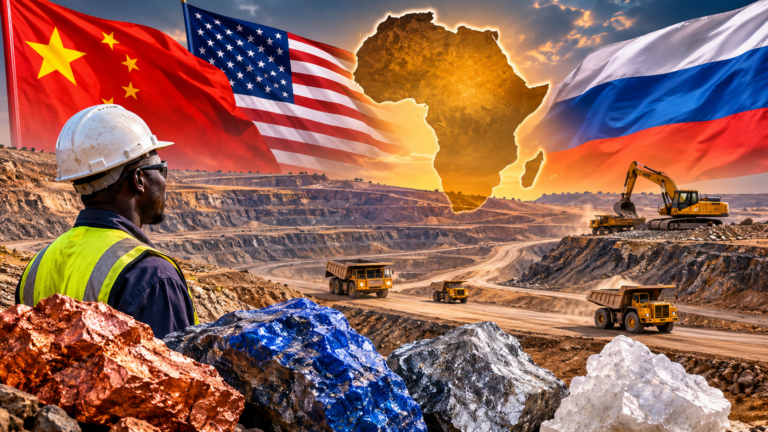
Africa’s critical minerals: How China, America and Russia are competing for control
Africa's mineral wealth is attracting global powers, but ownership, processing capacity and political influence will determine who ultimately captures its economic rewards.
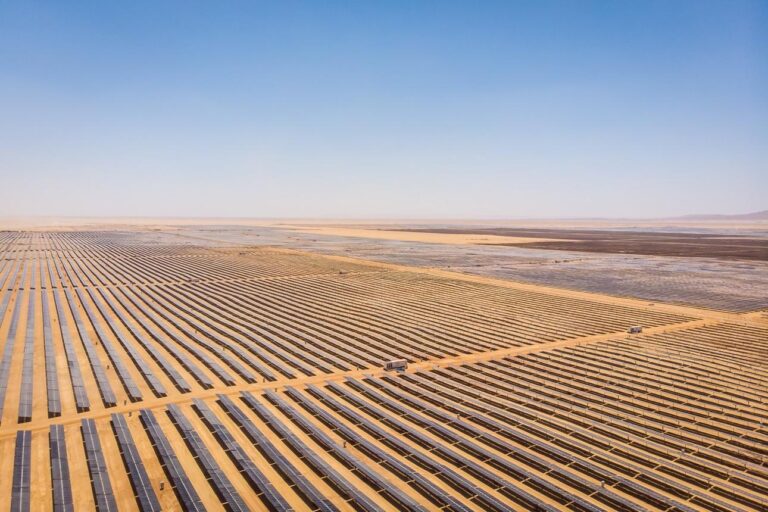
Africa could power the green revolution, but will Africans own it?
Africa's renewable energy boom and mineral wealth could reshape global industries, but ownership, financing and value capture will determine who truly benefits.
Africa has the minerals. But who controls the money?
Kenya's Mrima Hill mineral project exposes a deeper African challenge: attracting foreign investment while retaining ownership, industrial value and economic benefits.