

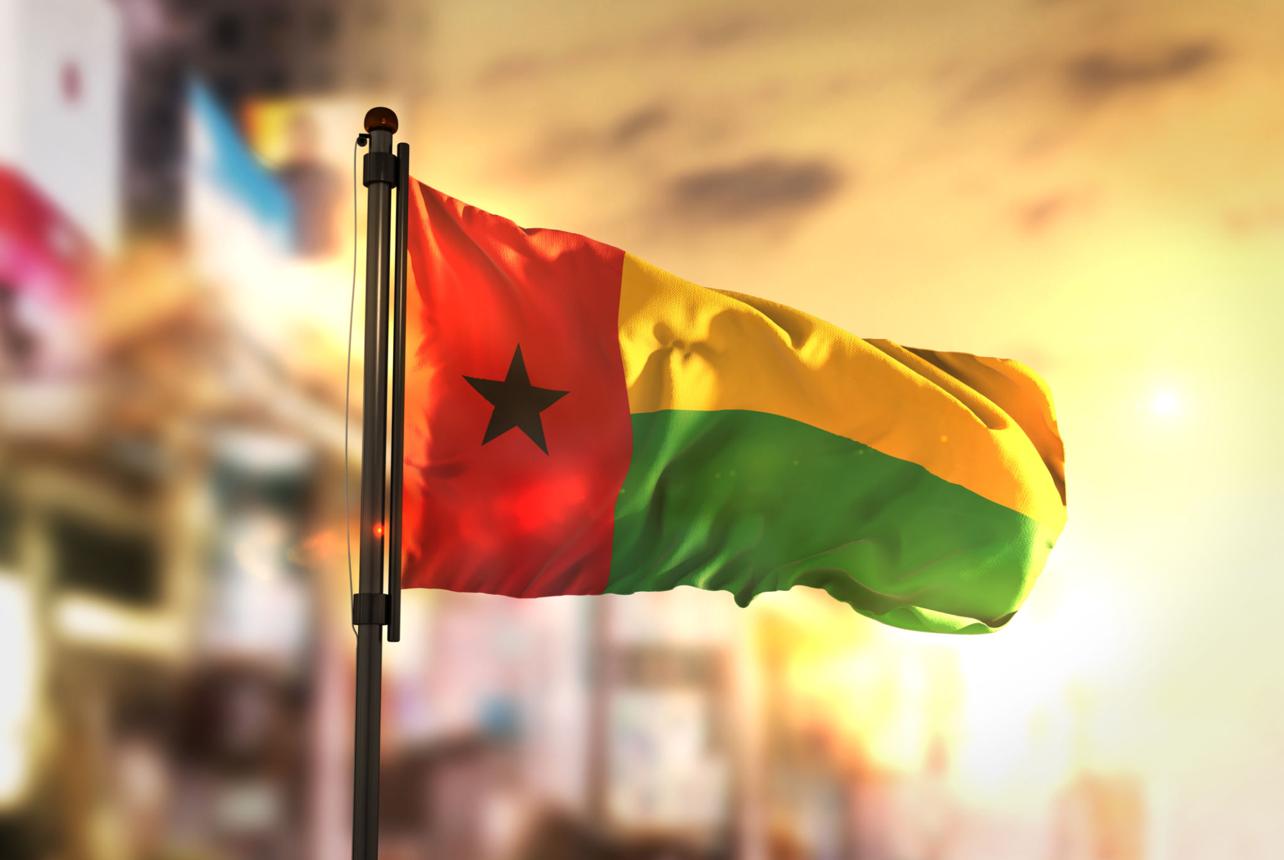
The postponement of elections until November 26, 2028, is more than a change of political timetable. It raises a fundamental question about who has the authority to determine when a country returns to democracy.
A transition that keeps moving further away
Military governments often justify taking power by promising to restore order, repair broken institutions and return political authority to civilians. The difficulty begins when the promised return to constitutional government becomes a deadline that can be repeatedly moved.
That is now the central problem confronting Guinea-Bissau.
On November 26, 2026, exactly one year after soldiers seized power, the country’s military authorities announced that presidential and parliamentary elections would not take place as originally scheduled in December 2026. Instead, the elections have been postponed until November 26, 2028.
The decision extends military-led transitional rule by approximately two years beyond the original timetable. It also places Guinea-Bissau at the centre of a wider debate about democratic accountability, military intervention and the declining ability of regional institutions to enforce constitutional principles.
The authorities, led by transitional President General Horta Inta-a, argue that the country lacks the technical, material and financial conditions necessary to organise credible elections. Their stated concerns include electoral preparations, constituency arrangements and institutional reforms.
These are legitimate considerations in any electoral process. However, the central question is whether extending military rule is genuinely necessary to address them, or whether the absence of a clear political exit strategy is becoming a problem in itself.
For West Africa, the distinction matters enormously.
How Guinea-Bissau arrived at another political crisis
Guinea-Bissau’s political instability did not begin with the November 2025 military takeover.
Since independence from Portugal in 1973, the country has experienced repeated political confrontations, military interventions and institutional breakdowns. Its democratic institutions have struggled to establish consistent authority over competing political and security interests.
The November 2025 crisis emerged from another disputed electoral process.
Presidential and legislative elections were held on November 23, 2025. Three days later, before official results were announced, military officers seized power, removed President Umaro Sissoco Embaló and interrupted the electoral process.
Both Embaló and opposition candidate Fernando Dias had claimed victory.
The military subsequently installed General Horta Inta-a as transitional president and promised a return to civilian government within approximately one year.
That commitment was important because the election process had not reached its conclusion. Rather than allowing the electoral institutions to complete their work, the military intervention effectively placed the country’s political future under military authority.
The situation has since become more complicated.
In August 2026, a constitutional referendum approved changes that strengthened presidential powers and reduced the size of parliament from 102 to 65 seats. The opposition had called for a boycott of the vote.
The authorities argue that electoral and constitutional reforms require additional preparation. Yet these changes also raise questions about the institutional framework that future civilian governments will inherit.
A country cannot strengthen democracy simply by rewriting its constitution. The legitimacy of institutions depends on how they are established, who participates in their creation and whether those exercising power are accountable to the public.
The danger of turning temporary military rule into a political system
The most important issue surrounding Guinea-Bissau’s election postponement is not necessarily the additional two years.
It is the precedent being established.
Military transitions are generally presented as temporary arrangements designed to restore constitutional government. Their legitimacy depends heavily on clear deadlines, transparent processes and measurable progress towards civilian rule.
When those conditions weaken, a transition risks becoming an alternative form of government rather than a bridge towards democracy.
This creates an institutional problem.
Military authorities control the state while also determining the conditions under which they will eventually surrender political power. Without independent oversight, civilian participation and enforceable deadlines, there are limited guarantees that the process will conclude as promised.
The concern is not that every administrative delay is evidence of deliberate political manipulation. Electoral preparation can be expensive, technically demanding and institutionally complicated.
The concern is that those responsible for extending the transition have a direct interest in the political arrangements they are creating.
A credible transition therefore requires more than an announced election date. It needs an independently monitored timetable, transparent electoral financing, political freedoms, functioning courts and an electoral commission capable of operating without military interference.
Without these safeguards, November 2028 could become another political promise rather than a dependable constitutional deadline.
ECOWAS faces a test of its democratic authority
For the Economic Community of West African States (ECOWAS), Guinea-Bissau presents a difficult test of institutional credibility.
The organisation has repeatedly declared its opposition to unconstitutional changes of government. Yet the region’s political landscape has become increasingly difficult to manage, with military takeovers and prolonged transitions challenging the authority of democratic institutions.
In December 2025, ECOWAS rejected the military authorities’ proposed transition programme and demanded a short, inclusive and structured return to constitutional government. It also called for the release of political detainees and warned that targeted sanctions could be imposed against individuals obstructing the process.
The organisation had an additional reason to insist on a rapid transition. Its observers, together with those of the African Union and the Community of Portuguese Language Countries, had considered the November 23 elections free and transparent.
The military takeover interrupted that electoral process before the official results could be announced.
The November 2026 postponement therefore raises a difficult question for ECOWAS: what happens when a transitional government disregards the regional organisation’s expectations and establishes a substantially longer timetable?
Diplomatic engagement remains necessary. Guinea-Bissau cannot be isolated from its neighbours, particularly when its political stability affects regional security, migration, trade and cooperation against organised crime.
However, dialogue without consequences risks weakening the organisation’s authority.
ECOWAS must also avoid a response that punishes ordinary citizens for decisions made by political and military leaders. Broad economic restrictions could deepen hardship in a country already facing substantial development challenges.
A more credible strategy would combine targeted pressure with sustained diplomatic engagement, support for independent electoral institutions and a clearly monitored transition agreement.
West Africa’s democratic crisis is becoming regional
Guinea-Bissau’s predicament cannot be examined in isolation.
West Africa has experienced a succession of military interventions and constitutional disruptions. Mali, Burkina Faso and Niger have undergone military takeovers, while Guinea has also experienced military-led transitional government.
The political consequences extend beyond individual national borders.
ECOWAS has faced disagreements with military governments, declining regional cohesion and the challenge of maintaining its influence over countries that question the organisation’s political and security arrangements.
The withdrawal of Mali, Burkina Faso and Niger from ECOWAS in January 2025 further complicated regional cooperation. Their creation of the Alliance of Sahel States has introduced a competing framework for political and security coordination.
Guinea-Bissau’s crisis is different in important respects. It is not part of the Sahel military alliance and has its own historical and institutional circumstances.
Nevertheless, its prolonged transition reinforces a troubling regional perception: that taking power outside constitutional arrangements can create a new political reality that neighbouring governments eventually have to accommodate.
This is particularly dangerous for smaller democracies.
When military authorities believe that regional opposition will eventually become manageable through negotiations, the deterrent effect of democratic sanctions weakens.
For governments facing political pressure, the lesson may be that constitutional rules are negotiable when powerful domestic institutions decide otherwise.
That is not simply a problem for ECOWAS. It threatens the credibility of democratic government across the continent.
The economic cost of political uncertainty
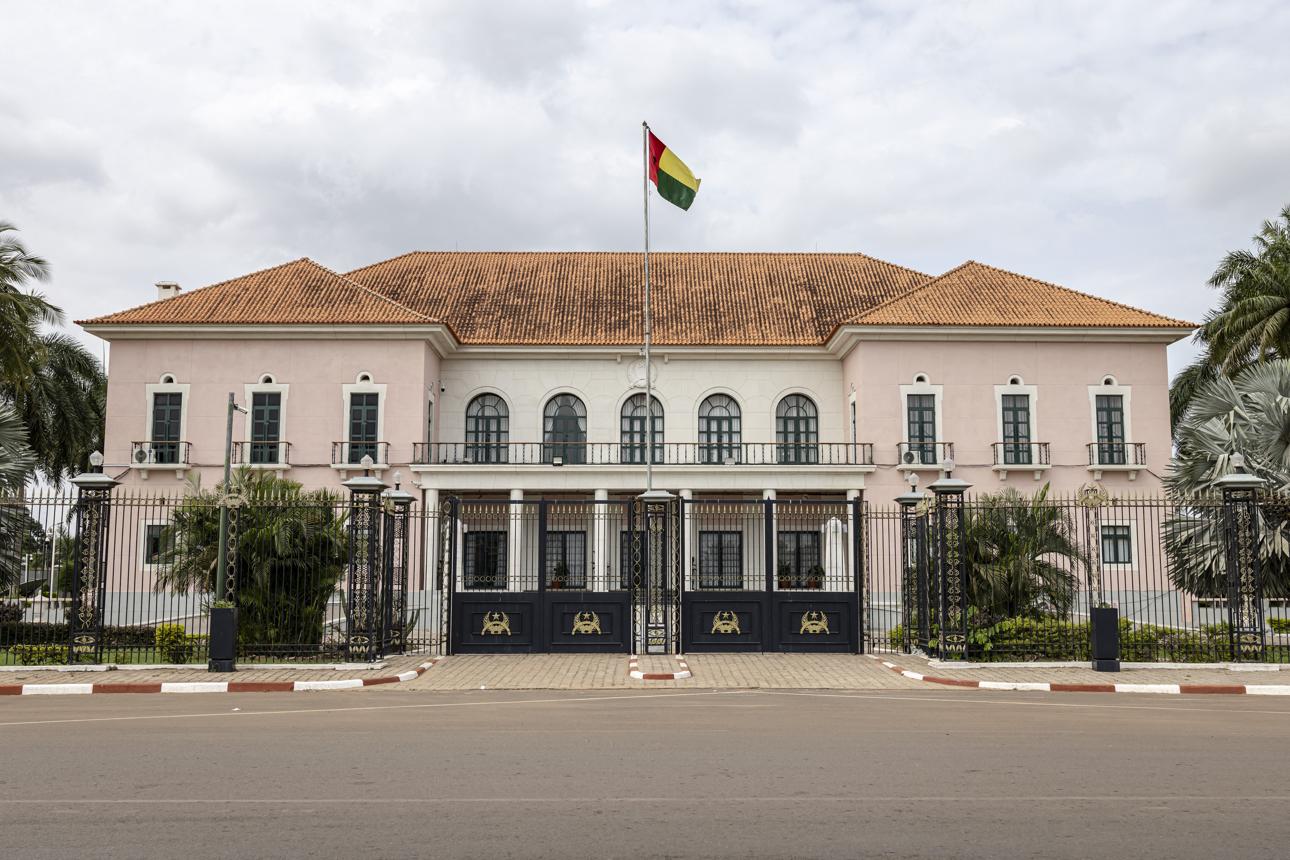
The consequences of Guinea-Bissau’s political crisis are not confined to parliament, military headquarters or diplomatic meetings.
They extend directly into the economy.
Political stability is an important consideration for businesses deciding whether to establish operations, finance infrastructure or enter a new market. Investors need predictable regulations, functioning courts, transparent public procurement and confidence that commercial agreements will survive political changes.
A prolonged military transition creates uncertainty around all these conditions.
It does not mean that every investor will immediately abandon Guinea-Bissau. Some businesses may continue operating, particularly in sectors where commercial opportunities remain attractive.
However, long-term investment decisions become more difficult when the country’s political direction is uncertain.
The International Monetary Fund’s April 2026 country report illustrates the economic pressures already facing the country. Public debt stood at an estimated 75.3% of GDP in 2025, while the IMF classified Guinea-Bissau as being at high risk of debt distress, although its debt was assessed as sustainable under the authorities’ fiscal commitments.
The economy is also heavily dependent on agricultural exports, particularly cashew nuts.
The IMF estimated that economic growth reached 5.5% in 2025, supported by stronger cashew production and export performance. Yet positive growth figures should not be confused with institutional resilience.
An economy can expand while remaining vulnerable to political shocks, weak public administration and limited access to affordable financing.
The postponed elections introduce another layer of uncertainty into this environment.
International development partners, lenders and private investors will want to understand whether existing economic commitments will remain intact, whether public financial management will remain credible and whether major infrastructure projects can proceed without political disruption.
For investors, the issue is not simply who occupies the presidential palace. It is whether the institutions responsible for protecting investments can function independently of political and military interests.
Foreign investment needs more than natural resources
Guinea-Bissau has economic opportunities that should not be overlooked.
Its agricultural sector, particularly cashew production, provides an important source of export earnings and rural livelihoods. Fisheries, tourism, transport infrastructure and regional trade also offer potential for economic development.
Its geographic position on the Atlantic coast gives it access to important maritime routes and neighbouring markets.
However, these opportunities require long-term investment, infrastructure development and institutional credibility.
The country’s history as a transit point for international drug trafficking adds another complication. The United Nations has repeatedly highlighted weaknesses in security and justice institutions, porous borders and the challenges of combating organised criminal networks.
A prolonged period of political uncertainty could complicate efforts to strengthen these institutions.
This matters to legitimate businesses because weak governance increases the costs of compliance, security, logistics and financial transactions.
It also matters to development partners whose financing depends on transparent institutions and credible public administration.
The connection between political stability and investment is particularly important for African economies competing for international capital.
As explored in our analysis of Africa’s gold ownership battle and the struggle for economic sovereignty, access to natural resources alone does not guarantee sustainable economic development. Institutions, financing arrangements and the ability to manage commercial relationships are equally important.
Guinea-Bissau must therefore consider the economic consequences of extending its transition beyond the immediate political calculations of its leadership.
Ordinary citizens are paying the price of uncertainty
Democratic crises are frequently discussed through the interests of presidents, military commanders, political parties and international organisations.
But the people most affected are often those with the least influence over the decisions being made.
Farmers need functioning markets and reliable transport networks. Small businesses require predictable regulations. Young people need employment opportunities and access to education. Families depend on public services that require stable government financing.
When political institutions become uncertain, the consequences can appear gradually through delayed investment, weakened public administration and reduced confidence in the future.
There is also a danger that prolonged political transitions narrow the space available for public participation.
Opposition parties, journalists, civil society organisations and independent institutions must be able to scrutinise government decisions without intimidation.
The United Nations’ November 2026 country brief on Guinea-Bissau specifically identified the need for inclusive political dialogue, protection of civic space, respect for fundamental freedoms and a credible, consensual roadmap towards constitutional order.
The report also highlighted the importance of continuing peacebuilding programmes involving young people, women, community organisations and institutions responsible for justice and security.
These priorities deserve attention because democracy cannot be rebuilt exclusively through negotiations among political elites.
It requires public participation and confidence that citizens have a meaningful role in determining their country’s future.
What Guinea-Bissau must do before 2028
The additional time before the proposed elections should not become an opportunity to consolidate military control.
If the authorities genuinely believe the country is not ready for elections, they must demonstrate precisely what needs to be completed and how progress will be measured.
A credible transition should include several essential commitments.
First, an independently supervised electoral preparation programme must establish clear deadlines for voter registration, constituency arrangements, electoral financing and the publication of results.
Second, political parties and civil society organisations must be allowed to operate freely. The opposition must have meaningful opportunities to participate in shaping the transition rather than merely being informed of decisions made by military authorities.
Third, constitutional reforms must be subjected to transparent public scrutiny, with appropriate institutional safeguards against the concentration of executive power.
Finally, ECOWAS, the African Union and international partners must establish a monitoring framework that measures progress against publicly agreed commitments.
The international community should also maintain engagement with Guinea-Bissau’s economic institutions to protect development financing, public services and essential investment programmes.
These measures would help distinguish a genuine institutional rebuilding process from an indefinite extension of military government.
The bigger question for African democracy
Guinea-Bissau’s decision to postpone elections until November 2028 is a warning that the democratic challenge facing West Africa is no longer simply about preventing military coups.
It is increasingly about what happens after the military takes power.
A coup can interrupt constitutional government in a matter of hours. Restoring it requires institutions capable of limiting executive authority, protecting political competition and ensuring that those exercising power remain accountable.
The distinction between a temporary transition and prolonged military rule is therefore fundamental.
ECOWAS must demonstrate that its commitment to constitutional government carries practical consequences, not merely diplomatic statements. African governments must recognise that political stability cannot be built by weakening the institutions that provide democratic legitimacy.
For Guinea-Bissau, the next two years will determine more than the date of its next presidential election. They will help establish whether the country can escape a recurring cycle of political confrontation and institutional breakdown.
The most important question is not whether the military can organise an election in 2028.
It is whether, by then, Guinea-Bissau will have built a political system in which no military command can decide unilaterally when the people are allowed to choose their government.
That is the real test of the country’s transition, and a test that West Africa cannot afford to ignore.

More from Politics
Who really controls Somalia? The UAE, Somaliland and the growing battle for sovereignty
Somalia's struggle for sovereignty exposes a deeper contest over strategic ports, regional autonomy, foreign investment and political power in the Horn of Africa.
Libya: Who really owns the state?
Libya’s oil wealth is expanding, but political fragmentation exposes the deeper struggle over institutions, military power and national sovereignty.
Abiy Ahmed begins new term as Ethiopia faces security and regional challenges
Ethiopia’s new political chapter begins with a stronger mandate, but unresolved conflicts and regional rivalries could define Abiy Ahmed’s second term.