

The Internet of Things — the network of physical devices embedded with sensors, software, and connectivity that allows them to collect and exchange data — has become a foundational technology for smart city applications globally, enabling city managers and utility operators to monitor infrastructure conditions, optimise resource use, and improve service delivery in ways that were previously impossible without the dense, real-time data that connected sensors provide. In Africa, smart city technology is beginning to appear in urban infrastructure across several major cities, with applications ranging from traffic management and utility monitoring to public safety systems and environmental sensing, even as the infrastructure prerequisites and governance frameworks needed to realise the full potential of these technologies continue to develop.
Smart Utility Management
Water and electricity utilities represent some of the most immediately impactful applications of IoT technology in African urban contexts. Smart meters — digital meters that measure consumption at frequent intervals and communicate data remotely to utility systems — are being deployed by several African water and electricity utilities, replacing manual meter reading with automated data collection that improves billing accuracy, reduces the labour cost of meter reading, and provides far more granular consumption data than traditional meters allow. This consumption data enables utilities to identify non-revenue water and electricity losses more precisely — pinpointing areas of the distribution network with high losses for targeted maintenance intervention — and to offer time-of-use pricing to commercial customers whose consumption flexibility can contribute to network load management. Remote disconnection and reconnection capabilities of smart meters also improve utility revenue management by reducing the cost and time involved in disconnecting non-paying customers and reconnecting them when accounts are settled.
Traffic Management Systems
Traffic congestion is a major economic cost in African cities, where rapid motorisation combined with limited road infrastructure expansion and limited adoption of integrated public transport systems creates chronic congestion that reduces business productivity, increases commute times, and degrades air quality. Intelligent traffic management systems — using sensor data from cameras, inductive loops, and connected signals to monitor traffic flows and dynamically adjust signal timing — are beginning to be deployed at key intersections in several African city centres, with potential for significant congestion reduction compared to fixed-cycle traffic signal operation. Traffic data from monitoring networks also supports more informed transport infrastructure planning decisions, by providing empirical data on actual traffic patterns that reveal bottlenecks and peak demand periods more precisely than periodic manual counts. Ride-sharing and navigation app data, aggregated from millions of smartphone users, provides additional rich traffic intelligence that transport agencies in several cities are beginning to use alongside fixed sensor infrastructure.
Public Safety Applications
Closed-circuit television surveillance networks, connected to central monitoring facilities and increasingly incorporating video analytics capabilities, have been deployed in several African city centres as components of urban public safety infrastructure. These systems aim to deter crime, support law enforcement investigation of incidents, and improve emergency response coordination. The expansion of city surveillance infrastructure raises important civil liberties and governance considerations — questions about who has access to surveillance footage, under what legal authorities it can be used, how long data is retained, and what oversight mechanisms exist to prevent misuse — that require careful policy attention alongside the operational security benefits these systems may provide. Facial recognition technology integrated with surveillance infrastructure, which has been deployed in some contexts, raises particularly significant concerns about accuracy, potential for discriminatory application, and privacy rights that have generated debate among civil society organisations and policymakers in several African markets where such technology has been introduced.
Environmental Monitoring
Air quality monitoring networks using low-cost IoT sensors deployed at multiple locations across cities are being used to provide real-time and historical air quality data that can inform both individual decision-making and policy responses to urban air pollution. In cities where vehicle emissions, industrial activity, dust, and biomass burning from cooking and waste burning create significant air quality challenges, empirical measurement data of this kind has value both for public health communication and for evidence-based pollution reduction policy. Similarly, flood early warning systems using river gauge sensors and rainfall measurement networks can provide advance notice of flood conditions to city emergency managers and residents in vulnerable areas, potentially allowing protective action that reduces flood impact. Environmental IoT applications have the advantage of typically lower governance controversy than surveillance applications, as they primarily generate data about the physical environment rather than about individual people.
Smart City Governance and Data Management
The smart city technologies generating the largest social benefit are generally those embedded in well-governed institutional frameworks that define clearly who owns and controls the data generated, how it is used, what protections exist for individuals whose data is collected, and what accountability mechanisms ensure that smart city investments genuinely serve public benefit. The governance dimension of smart city development — establishing appropriate legal frameworks, data management policies, interoperability standards, and oversight bodies — is as important as the technology itself, and cities that have invested in governance alongside technology infrastructure tend to achieve better outcomes than those that deploy technology without adequate governance foundations. Public-private partnerships in smart city infrastructure introduce additional governance complexity around data ownership, commercial use of publicly generated data, and the long-term implications of infrastructure dependency on private technology providers.
Local Technology Development and Capacity
The most sustainable smart city implementations are those that build domestic technical capacity alongside deploying technology, ensuring that cities have the engineering and data science skills to operate, maintain, and adapt smart city systems over time rather than depending on the original technology vendor for all ongoing system management. African technology companies and universities have been increasingly involved in smart city technology development, both adapting international solutions for local contexts and building original solutions for problems specific to African urban environments. Community engagement in smart city design — ensuring that the residents and communities affected by smart city technologies have a voice in how those technologies are designed and governed — is increasingly recognised as important for ensuring that these investments genuinely serve the populations they affect rather than primarily the interests of the technology vendors and city authorities who procure them.
Looking Ahead
Smart city technology deployment in Africa will continue growing as connectivity infrastructure improves, technology costs decline, and urban management challenges intensify with continued rapid urbanisation. The most impactful applications will be those directly addressing the most pressing urban management challenges — utility losses, traffic congestion, flood risk, waste collection efficiency — with governance frameworks that ensure technology serves broad public benefit, protects individual rights, and builds lasting domestic technical capability rather than creating new forms of infrastructure dependency.

More from Tech

How Nigeria is building Africa’s next AI talent powerhouse
Nigeria is combining public investment, university programmes and private-sector infrastructure to turn its large technology workforce into an AI-driven economic advantage.
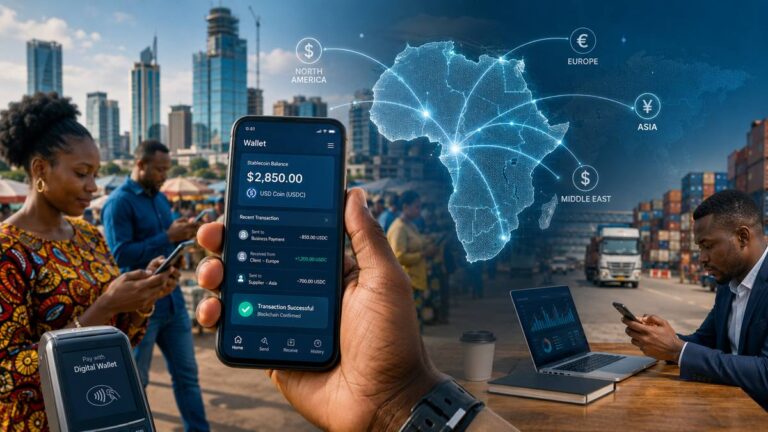
Why Stablecoins could transform Africa’s $1 trillion payments market
Africa’s growing digital economy is creating demand for faster, cheaper cross-border payments, putting stablecoins at the centre of a new financial infrastructure race.

Who owns Africa’s internet? Big tech’s new scramble for the continent
Global tech giants are pouring money into cables, cloud infrastructure and satellites, reshaping who controls Africa's digital future.