


Rwanda’s economy is growing at a pace that would be the envy of many African countries, but sustaining that momentum through 2035 will require a different kind of expansion: one driven less by public investment and construction and more by productivity, private capital, exports, manufacturing and skilled jobs.
Rwanda’s economic ambition is among the most demanding on the continent. Under Vision 2050, the country aims to become an upper-middle-income economy by 2035 and a high-income economy by 2050. The government’s target is for GDP per capita to exceed $4,036 by 2035, compared with about $1,124 in 2025, according to World Bank data.
That gap helps explain why the idea of tripling the economy by 2035 has become such a useful shorthand for the scale of Rwanda’s ambition. But the real test is not simply whether Rwanda can produce a larger GDP number. It is whether the country can raise productivity fast enough to generate higher incomes, create productive employment and reduce its dependence on public spending, imports and a relatively narrow export base.
Recent economic data show both the opportunity and the difficulty.
Rwanda’s GDP expanded by 9.4% in 2025, according to the National Institute of Statistics of Rwanda and the World Bank. The economy then grew 10% year-on-year in the first quarter of 2026.
Those figures are impressive. They are also not enough on their own.
The growth story
For more than two decades, Rwanda has pursued a development model built around strong state coordination, investment in infrastructure, improvements in public services and efforts to attract private investment.
The results have been significant.
The economy has moved far beyond the devastation left by the 1994 genocide against the Tutsi. Rwanda has developed a reputation for institutional discipline, relatively efficient public administration and ambitious long-term planning.
Its Vision 2050 framework calls for a transition from an agrarian economy towards a more productive, knowledge-based economy. The strategy places particular emphasis on human capital, competitiveness, urbanisation, innovation and economic integration.
The current five-year National Strategy for Transformation, NST2, puts numbers behind that ambition. The government expects average real GDP growth of 9.3% a year between 2024 and 2029, with industry and services each targeted to grow by roughly 10% annually and agriculture by more than 6%.
Rwanda’s recent performance suggests the target is not entirely detached from reality.
But maintaining close to double-digit growth for years is considerably harder than achieving it during a period of strong investment, construction activity and recovering domestic demand.
That is where the productivity question becomes central.
Productivity is the real test
The World Bank says Rwanda continues to face low productivity, insufficient job creation, infrastructure gaps and limited progress in innovation. It also warns that the benefits of structural transformation have tended to accrue disproportionately to more educated workers.
That creates a fundamental challenge for Rwanda.
A country can increase GDP by building roads, hotels, office buildings, industrial parks and other infrastructure. It can also generate strong growth through government spending and credit expansion.
But long-term income growth requires workers and businesses to produce more value from each unit of labour, capital and land.
In Rwanda, that means raising agricultural yields, helping small businesses become more productive, improving manufacturing capabilities, increasing the sophistication of services and developing companies capable of competing beyond the domestic market.
The distinction matters because Rwanda has a young and growing workforce. If economic growth does not generate enough productive jobs, GDP growth can coexist with persistent household pressures.
The World Bank says job creation remains at the heart of its new 2026-2035 country partnership discussions with Rwanda. Stakeholders have highlighted skills, private-sector growth, access to finance, agricultural productivity and value addition as critical priorities.
The message is clear: Rwanda now needs growth that reaches deeper into the economy.
The private sector gap
One of Rwanda’s biggest structural questions is whether its private sector can become large and productive enough to carry a greater share of the growth burden.
The government has invested heavily in infrastructure and development, helping establish the foundations for private-sector expansion. But public investment cannot remain the dominant engine indefinitely.
A World Bank assessment has previously estimated that private-sector investment would need to rise sharply, reaching roughly 32% of GDP by 2035 from about 13% in 2023, to support Rwanda’s middle-income ambition.
That would represent a major shift.
It means Rwanda must make it easier for domestic companies to expand, attract more foreign direct investment and encourage financial institutions to provide longer-term capital to productive businesses.
It also means creating a business environment in which firms can survive without depending heavily on government contracts or protected domestic markets.
For Rwanda, this is not simply an economic policy issue. It is a test of whether the country’s development model can transition from state-led acceleration to private-sector-led productivity growth.
Exports are the weak link
Perhaps the clearest constraint is Rwanda’s external position.
The International Monetary Fund said in a June 2026 analysis that Rwanda’s export base remains narrow and concentrated, while high logistics costs, limited value addition and weak integration into global value chains constrain export performance.
That is a serious challenge for a landlocked country.
Rwanda must import many of the goods, machinery, energy inputs and materials required to expand its economy. If imports rise faster than exports, rapid domestic growth can translate into persistent external imbalances.
The solution is not simply to export more of the same commodities.
It is to move up the value chain.
Coffee is one example. Instead of exporting primarily raw or lightly processed products, Rwanda can capture more value through processing, branding and higher-end markets.
The same logic applies to minerals, agriculture, manufacturing and services.
UNDP’s 2026 analysis argues that Rwanda needs greater export diversification and value addition across agriculture, manufacturing and energy. It notes that manufacturing has significant potential for job creation but remains underdeveloped, while agriculture continues to employ much of the workforce despite relatively low productivity and exposure to climate shocks.
Agriculture cannot be left behind
Rwanda’s transformation will ultimately be judged in rural areas as much as in Kigali.
Agriculture remains central to employment and household incomes. Yet agricultural productivity remains constrained by small-scale production, climate vulnerability, limited access to finance and weaknesses in value chains.
A successful transition therefore cannot simply move workers out of farming.
It must make farming itself more productive.
That means irrigation, better seeds, mechanisation where appropriate, storage, processing, access to markets and stronger links between farmers and manufacturers.
It also means developing agricultural businesses that can supply regional and international markets.
The opportunity is particularly important because Rwanda sits within a potentially large regional market. The African Continental Free Trade Area offers a framework for expanding trade, although the gains will depend on logistics, competitiveness, standards and the ability of Rwandan firms to produce at scale.
UNDP has identified stronger regional trade, export diversification and value addition as key elements of Rwanda’s next phase of structural transformation.
Manufacturing must move faster
If Rwanda is to transform its economic structure, manufacturing will need to play a larger role.
NST2 targets industry growth of more than 10% annually, with manufacturing expected to grow by about 10.4% a year during the strategy period.
That is ambitious.
Manufacturing can create jobs at scale and generate demand for agricultural inputs, logistics, energy, finance and professional services.
But Rwanda faces a difficult cost equation.
Energy prices and reliability, transport costs and the price of imported inputs can make it difficult for domestic producers to compete with larger manufacturing economies in East Africa and beyond.
UNDP has specifically identified high energy costs and reliability issues as constraints on industrial competitiveness.
Rwanda therefore needs more than industrial parks. It needs competitive firms.
That requires affordable and reliable energy, efficient logistics, access to finance, skilled workers, predictable regulation and regional market access.
The debt question
The financing of Rwanda’s ambitious development programme is another issue investors will watch closely.
Public investment has helped transform the country’s infrastructure, but it has also increased fiscal pressures.
The World Bank projects public debt to rise above 77% of GDP by the end of 2026. It says climate vulnerability, pressure on natural resources and debt levels could make Rwanda’s long-term targets more difficult to achieve.
The IMF has also urged Rwanda to strengthen fiscal and debt management while encouraging greater private-sector participation.
In June, the IMF approved a $250 million Extended Credit Facility arrangement for Rwanda. The programme is intended to support macroeconomic adjustment, protect priority spending and promote private-sector-led growth while strengthening fiscal oversight of state-owned enterprises.
The issue is not whether Rwanda should continue investing.
It is where the next franc of investment produces the greatest economic return.
If public spending can crowd in private investment, increase productivity and expand exports, the effect can be transformative.
If it instead creates assets that require continued public financing without generating sufficient economic returns, the fiscal burden becomes harder to manage.
Inflation adds another pressure
Rwanda’s strong growth is also occurring in a more difficult global environment.
The IMF said inflation had risen to 13.2% year-on-year in April 2026, well above the central bank’s target range. It expects growth to moderate to 6.8% in 2026 before returning to around 7% in subsequent years under its baseline projections.
That is important.
A growth rate of 7% is still strong by international standards, but it is below the pace envisioned by Rwanda’s transformation strategy.
The difference between 7% and 9% or 10% sustained over many years is enormous when compounded.
It is why Rwanda cannot rely on growth momentum alone.
Productivity must accelerate.
Can the model deliver?
The answer is yes, but not automatically.
Rwanda has several advantages that many countries would struggle to replicate. It has a clear long-term development strategy, strong institutional coordination, a record of infrastructure investment and a demonstrated ability to execute large national programmes.
Its digital economy, services sector, tourism industry, financial sector and regional trade ambitions provide additional avenues for expansion.
Recent data also show that the economy remains resilient. GDP grew 9.4% in 2025, while the first quarter of 2026 recorded 10% growth compared with the same period a year earlier.
But the next stage is different from the last.
The country can no longer depend primarily on capital accumulation and public investment. It needs productivity gains that continue even when public spending slows.
That means better schools producing workers with market-relevant skills. It means businesses that innovate rather than simply expand. It means farmers earning more from each hectare. It means manufacturers producing goods that can compete across Africa. It means technology companies selling services beyond Rwanda.
And it means a private sector capable of generating enough productive employment for a young population.
The people behind the GDP
For Who Owns Africa, the most important question is therefore not whether Rwanda’s GDP can triple.
It is who benefits if it does.
Rwanda’s headline growth numbers tell only part of the story.
The World Bank has warned that job creation remains insufficient and that the gains from structural transformation have not been evenly distributed.
A growth model that produces impressive GDP figures but insufficient jobs would leave a major part of Rwanda’s population outside the transformation.
That is why agriculture, skills, small businesses and access to finance matter as much as megaprojects and foreign investment.
The measure of success by 2035 will ultimately be visible in household incomes, productivity, employment and business creation.
A harder decade ahead
Rwanda’s development story is entering a more demanding phase.
The first stage was about rebuilding institutions, restoring stability and establishing the infrastructure needed for growth.
The second is about transforming that foundation into a competitive economy.
That requires Rwanda to do something more difficult than simply growing quickly.
It must grow differently.
The government’s NST2 target of 9.3% average annual growth reflects the scale of the challenge. Vision 2050’s longer-term ambitions are even more demanding, requiring sustained high growth, private investment and substantial productivity improvements.
Recent analysis offers some encouragement. An African Futures scenario published by the Institute for Security Studies projects that a combination of policy improvements could lift Rwanda’s GDP per capita to $5,109 by 2035, substantially above its current-path projection of $3,544 and the Vision 2050 target of $4,036. But that scenario depends on coordinated policy interventions rather than growth occurring automatically.
That may be the clearest answer to Rwanda’s 2035 question.
The country has already demonstrated that it can grow fast.
Now it has to demonstrate that it can make growth productive, export-oriented and broadly shared.
If Rwanda succeeds, its transformation could become one of Africa’s most important economic case studies: not simply a story about a small country growing rapidly, but about how a state-led development model can evolve into a competitive private-sector economy.
If it fails to make that transition, the danger is not necessarily economic collapse. More likely, growth will gradually settle below the levels required to meet its most ambitious targets.
For Rwanda, 2035 is therefore less a finish line than a test of the model itself.
The question is no longer whether Kigali can build the foundations for growth.
It is whether millions of Rwandans and thousands of Rwandan businesses can turn those foundations into lasting productivity and prosperity.

More from Economy
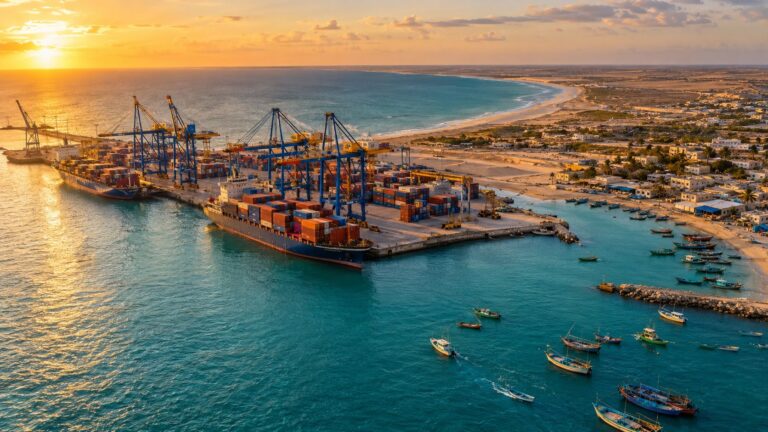
Somalia’s $2 billion blue economy: Where will the investment go?
Somalia courts foreign capital for its untapped ports, fisheries and coastline, though security and governance risks still worry global investors.
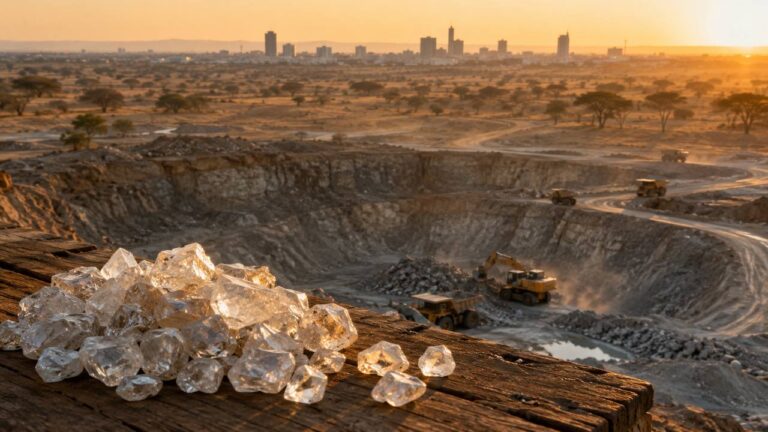
Botswana’s diamond crisis deepens as country searches for new sources of economic growth
Botswana's diamond-reliant economy is projected to rebound in 2026, yet mounting public debt and weak global demand threaten lasting recovery.
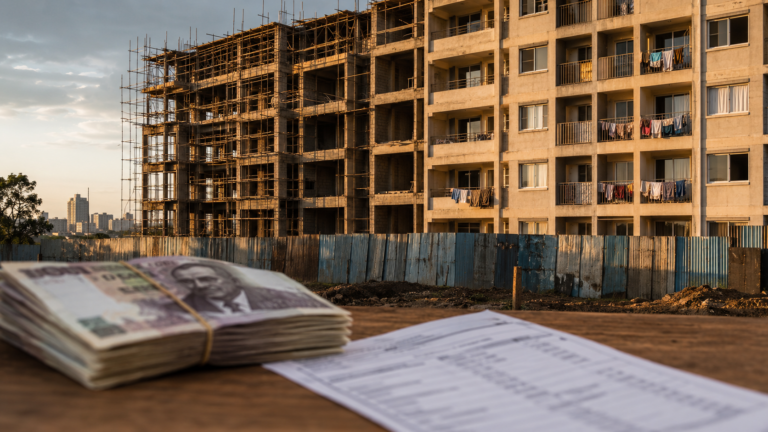
Who really owns Kenya’s housing levy billions?
Billions flow from payslips into Kenya's housing fund each month, yet delivery lags, enforcement is thin, and new debt looms.