

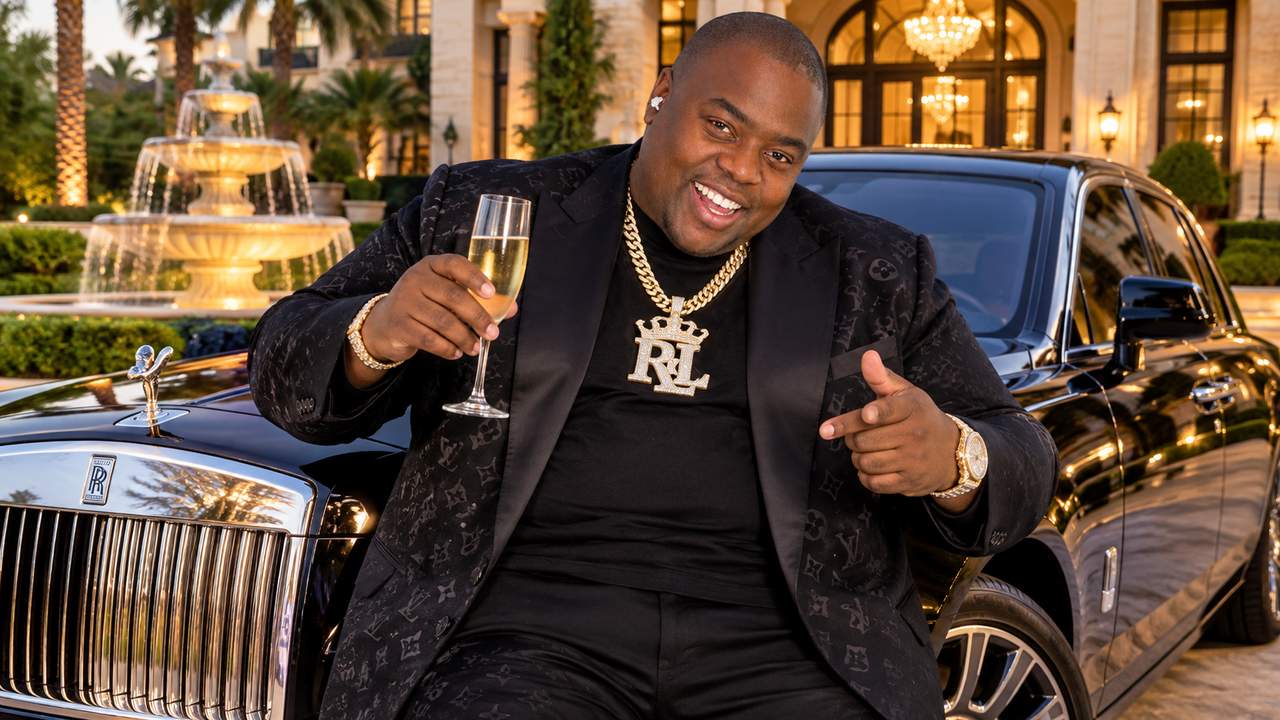
For years, Wicknell Chivayo was presented as a businessman, philanthropist and political supporter, but his real significance lies in what his rise says about how power is increasingly accumulated and displayed in Zimbabwe.
The death of Chivayo and his wife, Lucy Muteke, in a helicopter crash near Marondera on Oct. 1 has inevitably changed the way Zimbabwe is reflecting on his extraordinary public life. President Emmerson Mnangagwa confirmed Chivayo’s death, while authorities continued investigating the crash.
But the larger question does not disappear with the man.
How does a relatively young businessman become so closely associated with political power that his personal wealth, public generosity, government-linked business and relationships with senior political figures become almost impossible to discuss separately?
That is the more consequential Chivayo story.
Bigger than business
Chivayo’s importance was never simply that he appeared wealthy.
Zimbabwe has businessmen with substantial fortunes. It also has politically connected entrepreneurs, philanthropists and people who cultivate relationships with the country’s ruling establishment. What made Chivayo unusual was the extent to which all those identities appeared to converge in one highly visible public persona.
He did not present wealth quietly.
Luxury cars, cash gifts, meetings with influential figures and public declarations of political loyalty became part of his identity. His social media presence transformed private wealth into a public spectacle.
That mattered because Zimbabwe’s traditional understanding of power has long centred on formal institutions: the presidency, parliament, the ruling party, the military and the bureaucracy.
Chivayo represented something different.
He demonstrated that influence can also be accumulated outside formal office.
A new language of power
Across much of Africa, the business elite increasingly understands that influence is not always purchased through elections or exercised through government positions.
It can be built through relationships.
It can be reinforced through philanthropy.
It can be amplified through celebrity.
And it can become politically meaningful simply because everyone knows who has access to whom.
Chivayo was particularly effective at this language.
His public profile suggested a man who did not need to contest an election to become politically relevant. He could support people, organisations, causes and institutions while maintaining the identity of a private citizen.
That creates an interesting paradox.
The businessman remains outside government, yet his proximity to government can become part of his economic and social value.
The philanthropist gives away money, yet the visibility of the giving can create networks of gratitude and loyalty.
The political supporter does not necessarily hold office, yet his opinions can become part of political debate.
This is why Chivayo deserves to be examined as a phenomenon rather than merely as a personality.
The state contract question
The most important part of the debate concerns the relationship between private fortunes and state-linked business.
Chivayo’s company, Intratrek Zimbabwe, became associated with major energy projects, most notably the Gwanda solar project. The 100-megawatt project became one of the defining controversies around his business career after years of delays and litigation.
The project was awarded by the state, while Zimbabwe Power Company later terminated the contract, arguing that conditions required for implementation had not been fulfilled. The dispute moved through the courts, with Chivayo seeking damages.
This is where commentary must be careful.
A controversial government contract is not automatically evidence of corruption. A politically connected businessman is not automatically a corrupt businessman. Allegations are not convictions.
Indeed, Chivayo faced criminal proceedings linked to the Gwanda project and was ultimately acquitted. That legal outcome matters and should not be rewritten simply because the wider controversy remains politically useful to his critics.
But acquittal does not eliminate legitimate questions about procurement.
The deeper issue is structural.
When enormous public contracts move through a political system where personal networks matter, citizens are entitled to ask how opportunities are awarded, how performance is monitored and whether the same rules apply to everyone.
That question is bigger than Chivayo.
When access becomes influence
Chivayo’s relationship with Mnangagwa became one of the most visible aspects of his public identity.
He openly celebrated the president, publicly supported him and repeatedly appeared within circles associated with the ruling establishment. His political interventions became increasingly difficult to separate from his business persona.
That visibility generated admiration among supporters and suspicion among critics.
Neither reaction tells the whole story.
Political access does not necessarily mean political control. Nor does proximity to a president prove that every business transaction has a political explanation.
Yet access itself has value.
In countries where institutions can be opaque, knowing powerful people can create opportunities that are difficult to measure but easy to recognise. A phone call, an introduction, an invitation or a seat at the right table can sometimes be as valuable as capital.
That is why Zimbabwe’s Chivayo phenomenon should be discussed as a question of political economy, not gossip.
The politics of giving
Perhaps nowhere was the transformation of wealth into influence more visible than in Chivayo’s philanthropy.
He gave away cars. He distributed cash. He supported churches, musicians, sports figures, journalists and ordinary citizens. His gifts were frequently announced publicly, often with the recipient, value and occasion clearly identified.
In September, for example, Chivayo pledged US$2 million to 40 families of fallen national heroes as part of a gesture marking Mnangagwa’s birthday. He described the contribution as more meaningful than simply purchasing a personal birthday present for the president.
There is nothing inherently wrong with conspicuous generosity.
Zimbabwe has real economic hardship. A businessman who pays school fees, supports hospitals or gives families substantial financial assistance can produce an immediate and tangible benefit.
The harder question is what happens when philanthropy becomes a central mechanism of public identity.
A conventional charity may seek institutional credibility.
Chivayo often appeared to seek visibility.
That distinction matters.
A gift can relieve hardship while also creating prestige. It can help an individual while strengthening the donor’s reputation. It can be both generosity and social capital.
Those things are not mutually exclusive.
The African oligarch question
This is where the Chivayo story becomes continental.
Africa has long produced powerful business figures whose fortunes exist close to political systems. The details vary widely from country to country, and comparisons must therefore be made carefully.
But a broader pattern is visible.
The new political businessman does not necessarily want a government ministry. He may prefer access to ministers rather than a ministerial post. He may invest in sport, churches, entertainment or community projects because those networks reach further into society than a corporate boardroom.
The result is a hybrid form of influence.
It is commercial, political, cultural and social at the same time.
Chivayo’s public persona fitted that emerging model remarkably well.
His wealth gave him visibility. His visibility gave him celebrity. His political relationships gave that celebrity a different kind of significance. His philanthropy then converted wealth into relationships with people far beyond the traditional business world.
That is a powerful ecosystem.
The succession question
Zimbabwe is also entering a generational transition.
The country’s political establishment is still dominated by figures shaped by the liberation struggle and the politics of the twentieth century. At the same time, younger Zimbabweans are growing up in an environment where social media, private wealth and celebrity can create influence outside traditional institutions.
This creates an important question.
Who will shape Zimbabwe’s next political era?
It may not be only politicians.
It could include wealthy entrepreneurs, media personalities, church leaders, sports figures, technology investors and philanthropists whose networks cross traditional political boundaries.
Chivayo’s career offered an early and unusually visible example of what that future might look like.
His political influence did not come from holding public office. It came from his ability to occupy several worlds simultaneously.
What remains after Chivayo
The temptation after a dramatic death is to turn a complicated life into either a celebration or an indictment.
Neither is sufficient.
Chivayo’s supporters saw a businessman who spent his wealth helping others, supported national causes and cultivated relationships with leaders who could advance Zimbabwe’s interests.
His critics saw something more troubling: a businessman whose extraordinary wealth and proximity to political power raised questions about procurement, influence and the unequal distribution of access.
Both perspectives reveal something important.
The real issue is not whether Chivayo was generous.
He clearly was.
Nor is it simply whether he was politically connected.
He clearly cultivated powerful relationships.
The more difficult question is what these relationships reveal about the system surrounding him.
Where business ends
Zimbabwe’s challenge is not to prevent successful people from becoming wealthy or philanthropic.
It is to build institutions strong enough that wealth does not become a substitute for accountability.
A functioning procurement system should not depend on whether a businessman is popular with political leaders. A transparent contracting process should make personal relationships less important. Philanthropy should complement public institutions rather than become a parallel mechanism through which citizens seek access to resources.
That is the real lesson of Chivayo.
His story was never only about a man buying expensive cars or giving away millions.
It was about the changing architecture of influence.
In the old political order, power was easier to identify. It sat in offices, ministries, party structures and state institutions.
In the emerging order, power can sit in a business empire, a WhatsApp group, a church, a football club, a social media account or a philanthropic network.
Sometimes it can sit in all of them at once.
That is why the Chivayo phenomenon matters beyond Zimbabwe.
Africa’s new elite will not always announce itself through political office. Increasingly, it may arrive through wealth, visibility, generosity and access.
The question for Zimbabwe is therefore not simply who owns the money.
It is who can turn that money into influence, who benefits from the resulting networks and whether public institutions are strong enough to ensure that private relationships never become more powerful than public rules.
That is where business ends and politics begins.
And increasingly, in Zimbabwe, the line is becoming harder to see.

More from Politics
Ethiopia is sliding back into war: Who is really behind the new Tigray conflict?
Ethiopia's renewed Tigray war is exposing a dangerous struggle over power, borders, sea access and influence across the Horn of Africa.
Africa takes on the world map: UN backs a new picture of the continent
A Togo-led campaign to correct distorted world maps gives Africa a symbolic victory over geography, perception and colonial-era narratives.
Niger’s attempted mutiny raises questions over who profits from Sahel instability
Failed uprising highlights the intersection of military rule, foreign influence, strategic minerals and regional security in one of Africa's most volatile regions.