

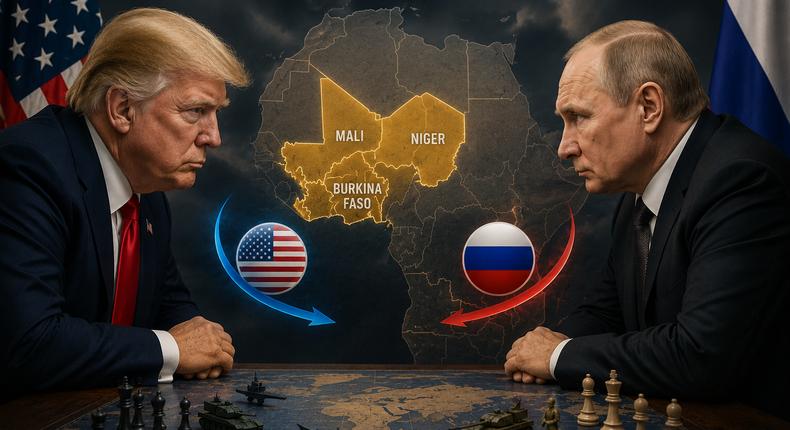
The United States may be discovering that losing influence in Africa is considerably easier than winning it back. After years of diplomatic tensions, military withdrawals and deteriorating relations with governments across the central Sahel, Washington is attempting to reopen doors that Russia has walked through and China has spent years building economic relationships behind. But the emerging competition exposes a deeper problem for American foreign policy: African governments are increasingly unwilling to accept international partnerships on terms determined entirely in Washington, Moscow or Beijing.
Washington’s diplomatic return to the Sahel
The diplomatic shift became increasingly visible in February 2026, when Nick Checker, a senior official heading the US State Department’s Bureau of African Affairs, visited Bamako for discussions with Mali’s foreign minister, Abdoulaye Diop.
The meeting was significant because it represented an attempt to move beyond years of strained relations following Mali’s 2020 and 2021 military coups.
Washington expressed respect for Mali’s sovereignty and indicated its willingness to rebuild cooperation around shared security and economic interests. Subsequent American engagement also extended to Burkina Faso and Niger, signalling an effort to restore communication with all three governments of the Alliance of Sahel States.
The change reflects a pragmatic adjustment in American policy. Rather than allowing disagreements over military rule to determine the entire relationship, Washington appears increasingly prepared to prioritise counterterrorism cooperation, commercial opportunities and diplomatic access.
However, reopening diplomatic channels is not the same as restoring strategic influence.
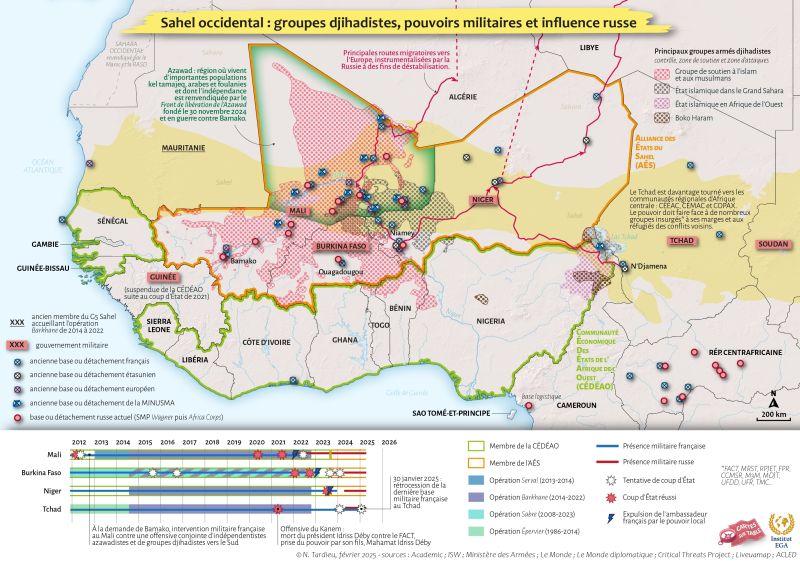
The three countries have undergone significant political and geopolitical realignments. Their military governments have challenged Western influence, distanced themselves from traditional European security partners and strengthened cooperation with Russia.
Mali, Burkina Faso and Niger have also withdrawn from the Economic Community of West African States, formally completing their departure in January 2025.
Their emerging regional alliance represents an important attempt to construct a different political and security arrangement, although its institutional and economic effectiveness remains a work in progress.
For Washington, the challenge is therefore not simply persuading three governments to receive American diplomats. It is understanding a region whose political priorities and international relationships have fundamentally changed.
The consequences of America’s military departure
The American return must be understood against the background of Washington’s previous military presence.
For years, Niger served as one of America’s most important security partners in West Africa. The United States invested heavily in intelligence, surveillance and reconnaissance capabilities, including Air Base 201 near Agadez.
The facility provided an important platform for monitoring militant movements across the Sahel and supporting regional counterterrorism operations.
But relations deteriorated following Niger’s July 2023 military coup.
The subsequent decision by Niger’s military authorities to end defence cooperation with Washington forced American forces to leave.
On September 16, 2024, US Africa Command confirmed that the withdrawal of American forces and assets from Niger had been completed.
More than 1,000 American personnel had departed, bringing an important chapter of US military engagement in the country to an end.
The consequences extended beyond the loss of a military installation.
Washington also lost a significant intelligence and operational position in a region where armed groups affiliated with al-Qaeda and Islamic State have expanded their activities.
The departure created opportunities for other international security partners, particularly Russia.
Yet it would be misleading to interpret the American withdrawal as the sole explanation for Russia’s growing influence. French military departures, local resentment towards Western intervention, failures of previous counterinsurgency strategies and changing domestic political attitudes all contributed to the geopolitical realignment.
The deeper lesson is that military access built around an existing government can disappear when the political relationship loses legitimacy.
For the United States, rebuilding that relationship requires considerably more than offering military training or intelligence cooperation.
Russia’s advantage: Security without Western political conditions
Russia’s growing influence in the Sahel is rooted in a combination of political pragmatism, security assistance and historical resentment towards Western intervention.
Following the decline of French influence in Mali, Burkina Faso and Niger, Moscow presented itself as an alternative partner willing to cooperate with governments that had become increasingly isolated from Western capitals.
The Wagner Group initially played an important role in this strategy. Following its disbandment and restructuring after the 2023 mutiny, many of its African operations were absorbed into Russia’s state-controlled Africa Corps.
The arrangement offers Moscow several advantages.
Russian personnel provide military training, equipment, advisory support and, in some circumstances, direct operational assistance. For military governments facing serious internal security threats, such cooperation can be politically attractive.
Unlike Washington, Moscow has generally placed fewer public governance and democratic reform conditions on its security partnerships.
This does not mean Russian cooperation is without conditions or commercial expectations. Security assistance can be accompanied by financial arrangements, political obligations and access to economic opportunities.
Russia’s relationship with Mali illustrates this model particularly clearly.
Moscow has developed security cooperation alongside interests in gold, energy and other strategic sectors.
However, the limits of Russian influence have also become increasingly visible.
In April 2026, a major insurgent offensive in Mali exposed serious vulnerabilities in the country’s security arrangements. The attacks weakened the military government’s position, while Russia’s Africa Corps suffered setbacks, including its withdrawal from Kidal.
The developments raised questions about Moscow’s ability to provide lasting security in a country where armed groups continue to exploit extensive territory, weak state institutions and difficult geographical conditions.
Russia can offer military assistance and political support. It cannot automatically resolve the structural causes of the Sahel’s insecurity.
For Washington, this distinction matters. Russia’s influence is significant, but it is not necessarily permanent or beyond challenge.
China is playing a different geopolitical game
The American debate about the Sahel frequently places Russia and China together as competing geopolitical adversaries.
That comparison can obscure an important difference.
Russia’s influence in the central Sahel is particularly visible through military and political relationships. China’s influence across Africa is much more deeply embedded in trade, infrastructure, industrial investment and commercial networks.
Beijing does not need to replicate Russia’s security model to maintain economic influence.
Its partnerships are built around long-term commercial relationships, construction projects, mining investments, transport infrastructure, energy and access to markets.
The scale of China’s continental economic presence is substantial. According to the Congressional Research Service, China-Africa trade reached approximately $275 billion in 2024, demonstrating the depth of the relationship across the continent.
China’s interests in the Sahel are not identical across Mali, Niger and Burkina Faso. Niger, for example, has important Chinese-linked energy and infrastructure interests, while China’s broader economic engagement extends across numerous African markets.
This is an important distinction for American policymakers.
Washington may be able to negotiate a new security partnership with Mali, but that does not mean Chinese companies will surrender their commercial relationships or infrastructure positions.
Nor does a military government necessarily have to choose between American diplomacy, Russian security cooperation and Chinese investment.
These relationships can coexist.
African governments increasingly recognise that maintaining several international partnerships can provide greater diplomatic flexibility and reduce dependence on any single external power.
For China, the central objective is economic access and the protection of commercial interests. For Russia, political and security partnerships remain particularly important. For America, the challenge is to combine diplomatic influence with credible economic engagement.
The three powers are not competing on precisely the same playing field.
The strategic minerals question
One of the most important dimensions of America’s renewed African engagement is the growing importance of strategic minerals.
The global demand for minerals such as lithium, uranium, gold, manganese, copper and other critical materials has increased their geopolitical significance.
These resources are essential to advanced manufacturing, renewable energy, electronics, transport systems and defence technologies.
The Sahel occupies an important position in this wider resource landscape.
Niger is a significant uranium producer, Mali has a major gold industry and Burkina Faso has substantial gold production. Their mineral wealth creates opportunities for governments seeking investment, foreign exchange and greater control over national resources.
For Washington, stronger diplomatic relationships could help American companies explore investment opportunities and diversify supply chains.
But there is a contradiction in the American approach.
The United States wants more reliable access to strategic resources while African governments increasingly want greater domestic ownership, local processing, technology transfer and a larger share of mining revenues.
These objectives are not necessarily incompatible. However, they require investment agreements that go beyond securing access to raw materials.
This is particularly important in a region where resource nationalism has become an increasingly prominent political issue.
Mali’s revised mining framework, adopted in 2023 and implemented through subsequent regulatory changes, seeks to increase state and domestic participation in mining projects.
Burkina Faso has also taken steps to strengthen state involvement in its mining industry.
These policies reflect a broader continental debate about who ultimately benefits from Africa’s natural resources.
Who Owns Africa has examined this issue in its analysis of who really owns Africa’s gold and the battle for mines and refineries.
For Washington, the lesson is straightforward: access to African minerals increasingly depends on negotiating with governments that want economic transformation, not simply foreign extraction.
America’s economic proposition remains unfinished
The United States has important advantages that Russia cannot easily replicate.
American financial markets, advanced technology, private-sector investment, universities and research institutions offer opportunities that extend well beyond military cooperation.
Washington can also mobilise development finance, export credit, infrastructure partnerships and private capital.
Its support for the Lobito Corridor, linking mineral-producing regions of the Democratic Republic of Congo and Zambia to Angola’s Atlantic coast, demonstrates how infrastructure can become part of a broader American economic strategy.
However, the corridor is located in Central and Southern Africa, not the central Sahel. Its relevance lies in demonstrating the kind of integrated economic partnership Washington could pursue elsewhere.
The challenge is translating diplomatic promises into projects that create visible economic benefits.
Sahelian governments need reliable electricity, roads, irrigation systems, agricultural investment, telecommunications infrastructure and employment opportunities.
They also need commercial partners willing to operate in difficult security environments.
A strategy focused primarily on diplomatic competition with Moscow and Beijing will struggle to address these priorities.
Washington’s emerging emphasis on trade and commercial diplomacy could provide an opening. But investment requires more than political announcements. It needs predictable regulation, workable financing, infrastructure and confidence that projects can survive political changes.
The United States must demonstrate that its economic proposition offers something tangible to ordinary citizens, not merely strategic advantages to foreign corporations.
For a wider examination of this issue, see Who Owns Africa’s analysis of why the United States is turning to Africa for the minerals behind the next industrial race.
The Sahel does not want another external master
Perhaps the biggest mistake Washington could make is interpreting the region’s geopolitical realignment as a simple contest between Western and Russian influence.
The military governments of Mali, Burkina Faso and Niger have drawn considerable domestic support from their rejection of perceived external interference.
Their political messaging places sovereignty, national dignity and control over domestic affairs at the centre of their international relationships.
These themes resonate beyond military institutions. They reflect longstanding frustrations over insecurity, economic dependence and the historical imbalance between African governments and powerful external partners.
However, the rejection of Western influence does not automatically mean that every alternative partnership will deliver better outcomes.
Russian security involvement has attracted serious allegations of abuses and raised questions about accountability. Meanwhile, economic cooperation with China does not automatically guarantee local industrial development or equitable distribution of profits.
African sovereignty should not mean replacing dependence on one foreign power with dependence on another.
The three Sahelian governments must also confront their own responsibilities. Security failures, restrictions on political freedoms, weakened institutions and the absence of credible democratic transitions cannot be explained entirely by foreign interference.
The same principle applies to Washington.
If American engagement becomes another exercise in obtaining strategic concessions without adequately considering local political and economic priorities, it risks repeating the mistakes that contributed to the deterioration of earlier relationships.
The most sustainable partnerships will be those that respect African decision-making while maintaining credible standards of transparency, accountability and human rights.
What a successful American return would require
Washington still has an opportunity to rebuild its position, but its approach will need to be considerably more sophisticated than simply countering Russian influence.
First, it must maintain diplomatic consistency. Relationships cannot be rebuilt through occasional high-level visits followed by periods of political disengagement.
Second, security cooperation must focus on measurable improvements in civilian protection, intelligence capacity and regional stability rather than simply strengthening military institutions.
Third, American economic engagement must deliver investment, employment and infrastructure that can be measured by communities.
Fourth, Washington must recognise that African governments have legitimate reasons to diversify their international relationships. Demanding exclusive geopolitical alignment is unlikely to produce lasting cooperation.
Finally, the United States should engage African regional institutions and neighbouring coastal states. The Sahel’s insecurity affects countries beyond the three Alliance of Sahel States members, including Benin, Togo, Ghana and Côte d’Ivoire.
A sustainable regional strategy cannot be built around isolated bilateral relationships.
It must address cross-border insecurity, trade, migration, food security and economic development.
The real test is whether Africa gains
The United States can regain diplomatic access to the Sahel. It can rebuild intelligence relationships, negotiate commercial agreements and compete for mining opportunities.
But restoring influence is a much more difficult undertaking.
Russia has established security relationships that will not disappear simply because American diplomats return. China has commercial networks and economic interests that cannot be displaced through diplomatic declarations.
More importantly, the governments and populations of the Sahel are increasingly determined to shape their own international relationships.
This creates an opportunity for African countries to negotiate more effectively with competing powers, but only if they develop the institutions and economic strategies necessary to convert geopolitical competition into domestic benefits.
The region should not measure the success of American engagement by the number of military agreements signed or Russian partnerships displaced.
It should measure success by whether insecurity declines, infrastructure improves, businesses expand, mineral revenues benefit citizens and governments become more accountable.
The same standards should apply to Moscow and Beijing.
Ultimately, Washington’s return to the Sahel will test a much larger question about America’s relationship with Africa: whether the United States can move beyond seeing the continent primarily as a strategic arena and begin treating African countries as independent partners with their own priorities.
The Sahel is not waiting to choose its next geopolitical patron. It is searching for partners capable of delivering security, economic opportunity and respect for sovereignty.
America may yet regain influence in the region. But the countries of the Sahel will increasingly determine what that influence is worth.

More from Geopolitics
Why Turkey is building a spaceport in Somalia
Turkey’s spaceport in Somalia is about more than rockets, giving Ankara strategic reach while testing how much sovereignty Mogadishu can leverage.
Egypt builds a Red Sea coalition as Ethiopia tensions rise
Egypt is aligning Horn of Africa partners around Nile security, Red Sea sovereignty, Sudan’s war and Ethiopia’s growing regional ambitions.
Tanzania turns Arusha into a global diplomatic capital
Tanzania is using parliamentary diplomacy to deepen its influence, widen partnerships and strengthen Arusha’s role in global affairs.